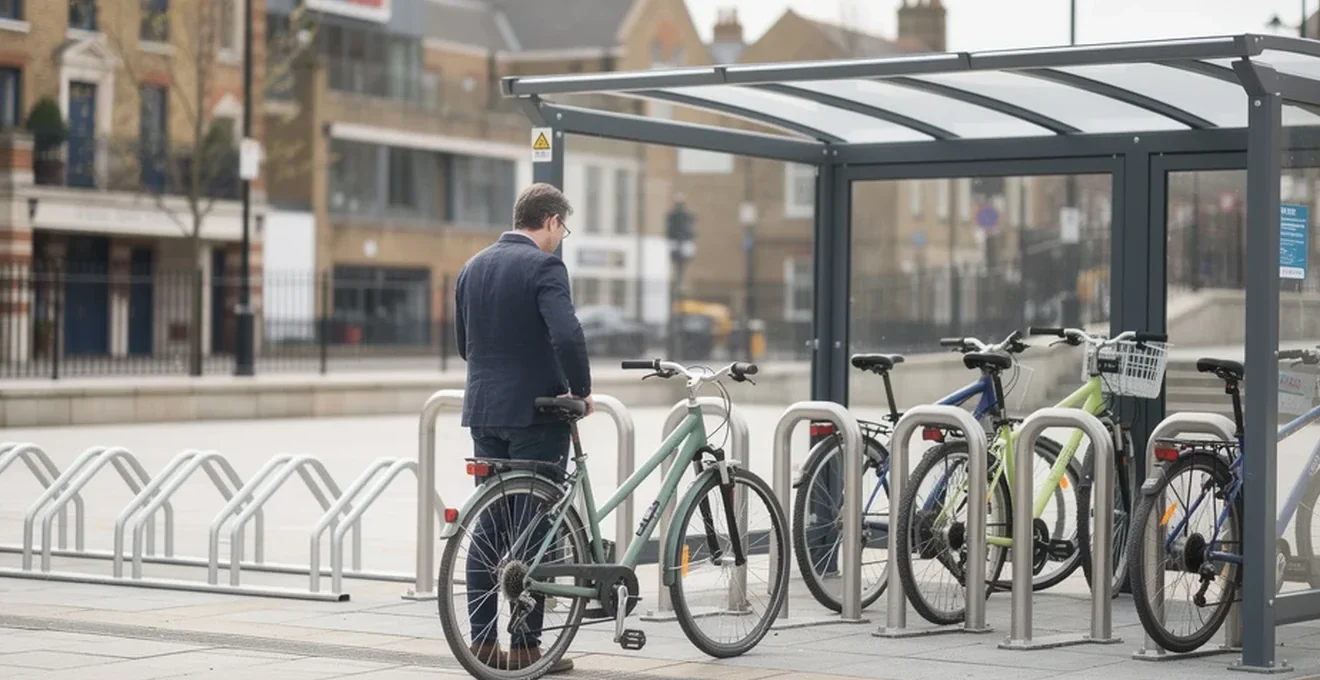
Choosing the right cycle parking for your site is not simply a matter of picking whatever looks tidiest in a catalogue. Whether you are responsible for a school playground, a corporate office car park, a train station or a block of flats, the decision between a bike rack, a bike stand and a bike shelter has real consequences for security, accessibility and long-term running costs. Each typology serves a slightly different purpose, and getting the choice wrong can mean wasted budget, frustrated cyclists, or worse, a site that fails to deter theft. This guide works through the practical differences between these products, the standards and accreditations that govern good design, the materials that survive the British climate, and the site planning and cost considerations that determine whether a project succeeds.
Understanding cycle parking typologies: racks, stands and shelters explained
The terms “bike rack” and “bike stand” are often used interchangeably, but they describe genuinely different products. As a general rule, the simpler the design, the more likely it is to be called a stand; the more elaborate and higher-capacity the structure, the more likely it is to be called a rack.
Bike stands are typically smaller, standalone structures designed to support one or two bicycles at a time, using the bike frame as the primary point of contact for locking. They are common outside shops, libraries and supermarkets, where cyclists need short-term parking for an hour or two. Bike racks, by contrast, are larger structures built to hold multiple bicycles simultaneously, often using the wheel as a locking and support point. They are the norm at transport hubs, schools and workplaces, where demand is higher and bikes may be left for a full working day. Racks can be standalone, wall-mounted, or combined with a shelter, and are generally considered more secure, sometimes offering two separate locking points rather than one.
Shelters sit above both categories in terms of scale. Rather than being a locking mechanism in themselves, a shelter is a structure that houses racks or stands and adds weather protection and, in enclosed or gated versions, an additional layer of security.
Sheffield stands vs Wheel-Bending racks: structural differences
The classic inverted “U” shape of the Sheffield stand has become the UK benchmark for functional, robust cycle security. It is a masterclass in simplicity: a tubular metal hoop, anchored to the ground at two points, with radius corners to avoid injury. Crucially, its design allows a cyclist to lock both the bicycle frame and at least one wheel to the stand using their own lock. This two-point contact is fundamental to proper bike security, making it far harder for thieves to make off with either the frame or a valuable wheel.
This is a significant improvement on the earliest forms of cycle parking, which secured only the front wheel via grooved concrete or a forked piece of metal. These older designs offered little stability for the frame or rear wheel and became known among cyclists as “wheel benders” because they could damage the wheel without properly securing the bike. The Sheffield stand, pioneered in the city from which it takes its name, was developed specifically to solve this problem, and it remains the most widely used and trusted format for short-term, high-visibility cycle parking outside schools, offices and town centres.
Two-tier and Semi-Vertical racks for High-Density storage
Where space is limited but demand is high, two-tier and semi-vertical racks make far better use of a given footprint than a row of Sheffield stands ever could.
Two-tier, or double-decker, racks stack bikes vertically across two levels, effectively doubling storage capacity within the same floor area. Because cyclists must lift their bike to load it onto the upper tray, most modern designs include a gas-assisted lifting mechanism to make this manageable. This format suits high-density locations such as train stations, universities and large corporate campuses, though it is worth noting that lifting a bike, particularly a heavy e-bike, can still be difficult for some users, so accessible ground-level provision should be retained alongside any two-tier installation.
Semi-vertical racks take a different approach, storing bikes at an angle with the front wheel raised into a channel. The staggered arrangement lets more bikes fit into a narrow corridor than traditional flat racks allow, making this format popular in residential developments, underground car parks and enclosed cycle hubs. As with two-tier systems, users are required to lift and support the weight of the bike to secure it, which can present a barrier for some cyclists.
Cycle shelters: cantilever, Mono-Pitch and Pod-Style structures
A high-capacity rack is only half the solution when the British weather is factored in. A shelter provides protection from rain, wind and sun, keeping bicycles in better condition and making cycling to a site more appealing even on a wet morning. Shelters can be free-standing units or installed against an existing exterior wall, and their structural shape is either symmetric or asymmetric, with a semi-enclosed design that can be supplemented with additional modules to form a fully enclosed compound.
Beyond weather protection, a well-designed shelter adds a layer of security. Enclosed or gated shelters create a controlled environment that acts as a powerful deterrent against theft and vandalism, offering valuable peace of mind for cyclists leaving bikes for an entire working day. Combining robust racking with a shelter can also be an important factor in meeting planning conditions or achieving environmental assessment credits for new developments.
Post-and-ring systems and their Load-Bearing capacity
Post-and-ring stands, first introduced in Toronto in 1984, offer a similar principle to the Sheffield stand: a vertical post with a ring or hoop that allows both frame and wheel to be locked. Like Sheffield stands, their load-bearing capacity depends heavily on how they are fixed to the ground. A stand that is simply bolted to a surface is only ever as strong as that surface, whereas a stand with its legs embedded in a concrete foundation is exceptionally difficult to remove or tamper with. This distinction in fixing method, rather than the design of the ring itself, is usually what determines how much abuse a post-and-ring system can withstand before failing.
Compliance with british standards and local authority regulations
Effective cycle parking is not just a matter of choosing an attractive product; it needs to comply with a body of guidance and standards designed to ensure safety, accessibility and consistency across the UK.
Sheffield city council cycle parking guidance and BS 5489-1:2013 requirements
The Department for Transport’s Cycle Infrastructure Design guidance, LTN 1/20, published in July 2020, sets out the core principles that cycle facilities should be coherent, direct, safe, comfortable and attractive. It stresses that cycle parking should be located near entrances, be well-lit, covered where possible, and free from obstructions, and it specifically recommends Sheffield stands or similar designs that allow both wheels and frame to be locked. LTN 1/20 is widely used by local authorities, planners and developers, and is linked to funding eligibility from Active Travel England.
British Standards also play a role in ensuring cycle parking is safe and fit for purpose. Structural loading standards ensure racks and shelters can safely bear the weight of bicycles plus wind or snow loading, while BS 8300-1:2018 brings together authoritative recommendations on inclusive and accessible design for the external built environment, covering aspects such as street design, landscaping, and both horizontal and vertical movement. Building Regulations Part M also applies where cycle parking is part of a wider development, requiring step-free access and sufficient manoeuvring space for people with limited mobility or those using non-standard cycles.
Secured by design accreditation for cycle storage solutions
Secured by Design, a UK police initiative, promotes design principles that reduce crime, including standards for secure cycle parking with natural surveillance, good lighting and CCTV. Cycle parking in Secured by Design-compliant developments must be secure, weather-protected and easily accessible, which both deters theft and increases user confidence. For new-build developments, achieving this accreditation can streamline planning approval and contribute towards BREEAM credits. Alongside it, Sold Secure accreditation, administered by the Master Locksmiths Association, tests and rates the theft resistance of security products, including cycle stands and locks, giving purchasers an independent benchmark for security performance.
Sustrans design guidance on spacing and accessibility compliance
Spacing is one of the most commonly overlooked aspects of cycle parking design, yet poor spacing can render an otherwise well-specified installation frustrating or even unsafe to use. Cycle infrastructure design guidance recommends at least 0.6 metres clearance between stands and any adjacent wall, with a clear space of at least 1.0 metre in front to allow a bicycle to be wheeled into position. For Sheffield stands arranged in rows, a spacing of 0.8 to 1 metre between each stand is recommended, with an aisle of at least 2 metres behind for ease of movement. Each parking bay should allow roughly 2 metres in width by 0.75 metres in length per bicycle, which is enough to accommodate cargo bikes, adaptive cycles and bikes fitted with panniers.
Accessibility guidance also recommends that at least 5% of cycle parking spaces should be designed for larger or adapted cycles, achieved through wider spacing, custom stands and step-free access. Disabled cycle parking bays should be at least 3 metres long by 1.2 metres wide, with an additional 1.2 metres of level transfer space to allow safe movement between the cycle and other mobility aids, rising to at least 1.5 metres wide where features such as bollards or lamp posts affect manoeuvring space.
Material selection and weather resistance for outdoor installations
A bike rack, stand or shelter is a long-term investment, and in the UK that means it must be tough enough to withstand relentless rain, frost and changing seasons without rusting, staining or weakening.
Galvanised steel versus stainless steel corrosion resistance
Galvanised steel is the industry standard for outdoor cycle parking, and for good reason. The steel is coated in a layer of zinc, creating a tough, sacrificial barrier that actively resists rust and corrosion. It is a low-maintenance, high-durability choice that can be installed and largely forgotten about for years, though it does develop a flat matte grey appearance over time and offers limited scope for customisation.
Stainless steel sits a step above galvanised steel in terms of finish. Its chromium content makes it inherently corrosion-resistant, and it requires minimal maintenance while offering a sleek, modern appearance well suited to premium corporate or architectural developments. It is also highly resistant to vandalism and general wear. The trade-off is cost: stainless steel is more expensive upfront than galvanised steel, but its longevity often offsets that investment over time, particularly in high-footfall areas or coastal locations where salt exposure accelerates corrosion in lesser materials.
Powder-coated finishes and RAL colour specifications
Where appearance matters, powder coating applied over galvanised steel adds a further protective layer while opening up a wide range of colour options, allowing racks and stands to match company branding or blend into a specific setting. Most manufacturers offer a choice of RAL colour and finish, whether galvanised steel alone, galvanised and powder coated, or powder coated only.
Powder coating is not without its vulnerabilities, however. It is more susceptible to chips and scuffs than galvanised or stainless steel, and if the coating is breached, rust can take hold on the exposed metal beneath. For this reason, powder-coated installations benefit from periodic inspection and maintenance. Anti-graffiti additives can also be incorporated into powder-coated finishes, allowing paint and marker pen to be wiped away without damaging the underlying coating, which is particularly useful in public or high-traffic settings.
Polycarbonate roofing panels versus trapezoidal steel sheeting
For shelters, the choice of roofing material affects both weather resistance and security. Polycarbonate panels, often used at around 4mm thickness, are lightweight, allow natural light through, and are highly resistant to shattering compared with glass or acrylic. For sites with a higher vandalism risk, mesh steel sheeting can be sandwiched between polycarbonate layers to resist cutting and deformation. Trapezoidal steel sheeting, by contrast, offers a more robust, fully opaque roof that can be a better fit for exposed or high-risk sites, though it does block natural light and can feel more enclosed. Whichever material is chosen, shelters need smooth, continuous surfaces that prevent standing water, along with proper drainage channels, pitched or curved roofing, and sealed fixings to keep moisture out.
Site assessment and capacity planning for cycle parking infrastructure
Getting capacity and layout right from the outset avoids the twin problems of under-provision, which leads to clutter and overflow, and over-provision, which wastes space and budget.
Calculating bicycle storage density per square metre
As a rough guide for planning purposes, residential developments typically need one to two cycle parking spaces per residence, offices around one space per ten employees, and retail developments roughly one space per 100 to 250 square metres of floor area. Beyond these general benchmarks, the choice of rack format has a direct effect on density: a standard Sheffield stand accommodates two bikes in its footprint, a two-tier rack can double the number of bikes stored in the same floor area compared with a standard rack, and semi-vertical racks allow more bikes to be fitted into a narrow width than flat horizontal storage.
Footfall analysis for railway stations, schools and retail parks
Different site types call for different combinations of rack and shelter. The table below sets out sensible starting points based on typical footfall patterns and user needs.
| Location Type | Recommended Rack Type | Key Benefit | Best For |
|---|---|---|---|
| Corporate Office | Two-Tier System / Shelter | Maximum capacity in a small footprint | High employee numbers, limited space |
| School/College | Toast Racks (welded Sheffield stands) | Cost-effective, simple, and very durable | High-volume use, budget-conscious projects |
| Retail Park | Sheffield Stands / Covered Racks | Easy access and high visibility | Shoppers needing quick, secure parking |
| Train Station | Two-Tier System in a Shelter | Highest density for commuter traffic | Protecting bikes left for long periods |
| Residential Flats | Semi-Vertical Racks | Space-saving in narrow areas | Corridors, underground car parks, sheds |
Location within the site matters just as much as the rack type. Cycle parking should ideally sit within 15 metres of a single destination entrance for short-stay parking, or within 25 metres where it serves multiple destinations, ensuring it remains visible, convenient and genuinely competitive with driving.
Ground fixing methods: Surface-Mounted versus In-Ground installation
How a rack or stand is fixed to the ground is just as important as what it is made from. Surface-mounted, or base-plated, installation involves bolting the base plates directly onto an existing hard surface such as concrete or tarmac. This method is quicker and less disruptive, making it suitable where digging is impractical, but its security is entirely dependent on the quality of the surface beneath it, and a base plate can be more vulnerable to forced removal with heavy tools.
Root-fixed, or concreted-in, installation is the gold standard for permanent, high-security sites. Here the legs of the stand are extended and set into an excavated foundation, typically around 200mm below ground level, then locked in with concrete. This makes the rack exceptionally difficult to tamper with or remove and is the recommended approach for tarmac, paving or any new development where security is the top priority. Wall-mounted racks are a further option where floor space is scarce, but they depend entirely on fixing into a solid structure. A solid brick or block wall provides a reliable anchor point, whereas plasterboard or stud walls require fixings to be driven directly into the timber studs behind the board rather than the plasterboard alone.
Security features and Anti-Theft design considerations
Bicycle theft remains a significant deterrent to cycling. Reported theft figures for England and Wales run into the tens of thousands each year, and the proportion resulting in a suspect being charged is very low, which makes the design of the parking itself the most reliable line of defence.
Sold secure rated locking points and D-Lock compatibility
The most effective security practice is to use stands or racks that allow both the frame and at least one wheel to be locked separately, ideally with the cyclist’s own D-lock or chain. This is the fundamental principle behind the Sheffield stand’s enduring popularity, and it should be considered a minimum requirement for any new installation. Stands should be constructed from thick, galvanised steel and firmly anchored to the ground, since even the best locking geometry offers little protection if the stand itself can be uprooted. For higher-value or longer-duration parking, options such as bike lockers or cycle hubs with access control, including key fob entry or PIN-code systems, provide a meaningfully higher level of security than open racks.
CCTV integration and sightline optimisation for cycle shelters
Good lighting and clear sightlines are as important as the hardware itself. Poorly lit cycle areas tend to attract thieves, so motion-sensor lighting and placement in well-overlooked areas significantly improve security. CCTV, whether monitored or simply recorded, acts as a further deterrent and provides evidence should an incident occur. Shelters and hubs benefit particularly from natural surveillance, positioned so that windows, footpaths or staffed areas overlook the parking rather than hiding it around a corner, which removes much of the advantage a hidden location would otherwise offer to an opportunist thief.
Cost analysis and procurement routes for bicycle parking projects
Budgeting for cycle parking should take into account the full lifecycle of the installation, not just the purchase price, since the cheapest option on paper is not always the most cost-effective over ten or twenty years.
Comparing capital expenditure across racks, stands and shelters
Costs vary enormously depending on scale and specification, from a few hundred pounds for a handful of basic Sheffield stands to several thousand for secure enclosed storage or a fully integrated cycle hub with access control. Stainless steel costs more upfront than galvanised steel, but its resistance to corrosion and vandalism means it can remain functional and presentable for decades with minimal upkeep. Similarly, a shelter represents a larger initial outlay than an open rack, but by protecting both bikes and hardware from the weather, it extends the working life of the whole installation. Ongoing maintenance, covering cleaning, inspection, occasional repainting and part replacement, should also be factored into any budget, since under-investment here can shorten the lifespan of even the highest-quality infrastructure.
Government funding schemes: active travel fund and local cycling and walking infrastructure plans
Active Travel England, established with government funding, was set up to create a national network of specialists working with communities to develop and enhance high streets and encourage more people to walk and cycle. Eligible schemes include infrastructure on high streets, safety zones around schools, and shared routes for pedestrians, cyclists and wheelchair users. Local councils may also offer their own funding support for retrofitting or upgrading existing cycle parking where it aligns with regional sustainability and active travel goals, so it is worth checking with the relevant local authority or regional transport body before finalising a budget.
Framework agreements with suppliers such as falco and cyclehoop
For public sector and larger commercial projects, procurement is often carried out through established supplier frameworks rather than one-off purchases. Working with an experienced manufacturer brings practical advantages beyond price: established UK suppliers can advise on compliance with LTN 1/20 and Secured by Design requirements, offer professional installation to validate warranties, and provide the technical detail needed to satisfy planning conditions. Given the variation in ground conditions, footfall patterns and security requirements from one site to the next, early consultation with a specialist supplier is generally the most reliable way to arrive at a scheme that is fit for purpose from day one.