The safest flooring for your nursery isn’t determined by the material itself, but by the hidden binders, adhesives, and finishes used in its construction.
- Unfinished, solid reclaimed wood is the gold standard for near-zero VOC emissions, as it contains no industrial binding agents.
- High-quality, solid strand bamboo can be a safe alternative, but only if you forensically investigate its adhesive composition to ensure it is free of urea-formaldehyde.
Recommendation: Your first step should always be to demand the Safety Data Sheet (SDS) for any flooring product and its required finishes. This allows you to verify the chemical composition yourself, moving beyond unreliable marketing claims.
Preparing a nursery is an act of love, but it often comes with a wave of anxiety. You choose the perfect crib, the softest textiles, and then you turn to the flooring. Suddenly, the air is thick with questions. That “new floor smell”—is it harmless, or is it the scent of toxic chemicals off-gassing into your baby’s environment? For health-conscious parents, the fear of Volatile Organic Compounds (VOCs) is profound. You hear about eco-friendly options like bamboo and the rustic charm of reclaimed wood, but the marketing language is often a confusing mix of green promises and technical jargon.
The common advice is to look for certifications or labels that declare a product “low-VOC” or “green.” While these can be starting points, they are not a guarantee of a truly non-toxic environment. The reality is more complex. The flooring material itself is often not the primary culprit; the danger lurks in the industrial resins, adhesives, and finishes used to bind, seal, and beautify the final product. A Consumer Reports study highlighted this by finding that solid wood flooring consistently had lower formaldehyde emissions than engineered products, a direct result of eliminating the adhesives central to engineered construction. This distinction is critical for both bamboo and wood.
This guide abandons passive trust in marketing labels. Instead, it equips you with a protective, technical mindset—the mindset of a building consultant. We will not just compare bamboo and reclaimed wood; we will teach you how to conduct material forensics. You will learn to decode what “new car smell” really means for your home’s air, how to analyze product data sheets to spot hidden toxins, and why the timing of your installation is a critical factor in managing chemical exposure. The goal is to empower you to move from a position of fear to one of informed control, ensuring the air your family breathes is as clean and safe as possible.
This article provides a structured approach to making an informed, health-first flooring decision. The following sections will walk you through the critical technical considerations, from identifying hidden chemicals to understanding the building science that impacts your indoor air quality.
Summary: The Consultant’s Guide to Toxin-Free Flooring Choices
- Why “New Car Smell” in Your Home Indicates Dangerous Formaldehyde Levels?
- How to Read Safety Data Sheets to Spot Hidden Isocyanates in Insulation?
- Cork vs. Linoleum: Which Material Is Naturally Antibacterial for Kitchens?
- The “Eco-Friendly” Laminate That Is Actually Bound With Plastic Resins
- When to Install Floors to Ensure Proper Acclimatization and Avoid Gaps?
- When to Renovate Your Bedroom: The 3 Signs Your Sleep Environment Is Toxic
- How to Insulate Your Attic Hatch Without Hiring a Contractor?
- How to Cut Your Home’s Heat Loss by 30% Before Winter Arrives?
Why “New Car Smell” in Your Home Indicates Dangerous Formaldehyde Levels?
That distinct, sharp odor often associated with new cars, furniture, and building materials is not the smell of “newness”—it is the smell of chemicals off-gassing into your air. The primary component of this odor is often formaldehyde, a known carcinogen used extensively in the production of composite wood products, adhesives, and finishes. When you detect this smell in your home, you are experiencing a direct indicator of VOC release. While government regulations have made progress, the risk is far from eliminated. Since 2017, the EPA has established compliant limits following CARB Phase 2 standards, but these standards regulate acceptable levels, not outright elimination.
Understanding the timeline of this process is crucial for protecting your family, especially young children who are more vulnerable to airborne pollutants. The off-gassing process is not a single event but a curve over time:
- First 72 hours: This is the peak off-gassing phase. Emissions are at their most intense as the most volatile compounds are released rapidly.
- 2-4 weeks: A substantial drop in odor and emission intensity occurs, though significant levels of VOCs are still present.
- 3-6 months: Low-level emissions continue. While the potent smell may have faded, the chemicals are still leaching into the environment, approaching what is considered “background levels.”
- 6-12 months: For most materials, the majority of VOCs finally dissipate to minimal, often undetectable, levels.
This extended timeline means that simply “airing out” a room for a few days is insufficient. The most protective strategy involves selecting materials with inherently zero or near-zero VOCs from the start. For bamboo flooring, this means choosing high-quality, solid strand products made with phenol-formaldehyde binders, which are far more stable and have significantly lower emissions than the urea-formaldehyde glues found in cheaper engineered versions. High-quality bamboo flooring can achieve levels as low as 0.005 ppm formaldehyde emissions, but this requires careful verification.
How to Read Safety Data Sheets to Spot Hidden Isocyanates in Insulation?
Trusting a product’s marketing slogan is a risk. To perform true material forensics, you must go to the source: the Safety Data Sheet (SDS), formerly known as the Material Safety Data Sheet (MSDS). This document is legally required for all chemical products and provides a technical breakdown of a substance’s composition, hazards, and safe handling procedures. While the title mentions insulation, the principles of reading an SDS apply to flooring, adhesives, sealants, and finishes. Isocyanates, often found in spray foam insulation and some powerful adhesives, are potent respiratory sensitizers, and an SDS is your primary tool for identifying them.
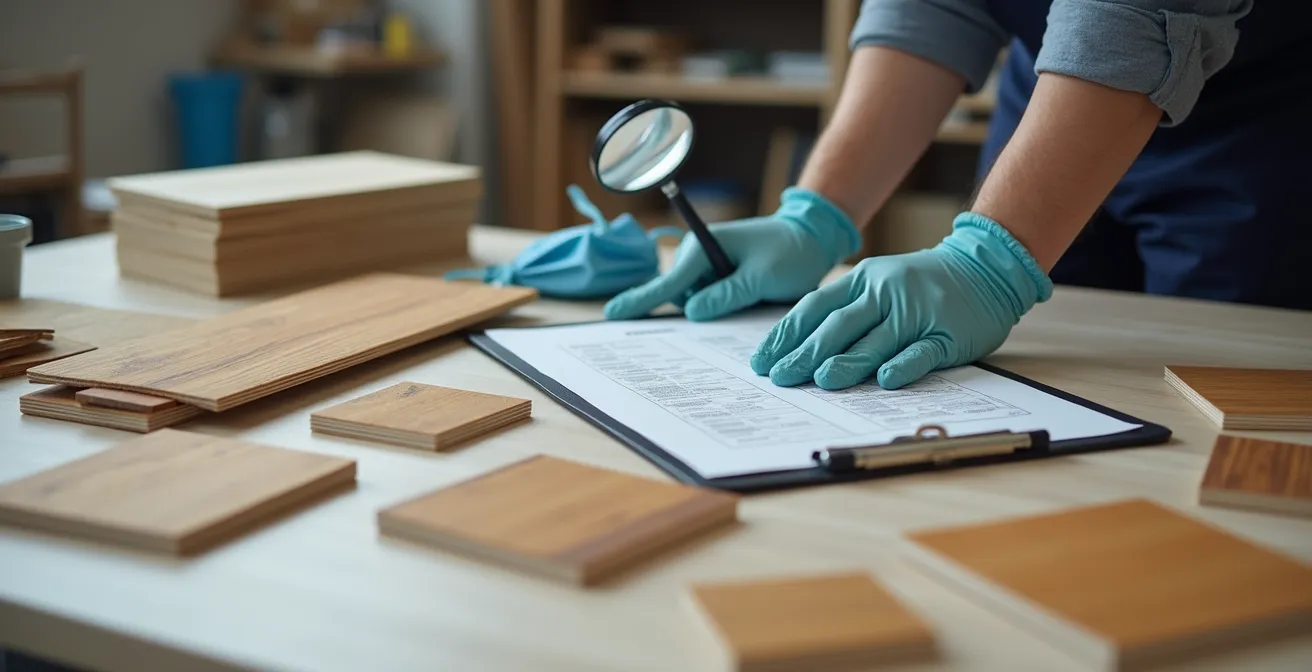
When you request an SDS from a manufacturer, you are no longer a passive consumer but an active investigator. Focus on these key sections:
- Section 3: Composition/Information on Ingredients: This is the most critical section. It lists all hazardous chemical components and their concentration range. Look for terms like formaldehyde, isocyanates (e.g., MDI), acetaldehyde, and benzene. If a manufacturer is reluctant to provide an SDS, consider it a major red flag.
- Section 8: Exposure Controls/Personal Protection: This section details permissible exposure limits (PELs) and threshold limit values (TLVs). It also recommends personal protective equipment (PPE). If it calls for respirators and extensive ventilation during application, it’s a clear sign the product contains significant VOCs.
- Section 9: Physical and Chemical Properties: This section often lists the VOC content, sometimes in grams per liter (g/L). This allows for direct comparison.
As a benchmark for finishes, the technical team at Easiklip Floors notes a specific legal standard. When refinishing floors, they clarify that “varnishes should contain less than 450 grams of VOCs per liter and lacquers only 350 grams per liter by law.” This gives you a tangible number to look for on an SDS when evaluating a product’s compliance and relative safety.
Cork vs. Linoleum: Which Material Is Naturally Antibacterial for Kitchens?
When renovating spaces like kitchens and nurseries, the conversation often extends beyond VOCs to include materials that are inherently hygienic. Both cork and linoleum are frequently promoted as “natural” and healthy alternatives to vinyl or laminate. While both offer strong benefits, their composition and properties differ significantly. Understanding these differences is key to selecting the right material for your health and performance needs.
Cork is harvested from the bark of the cork oak tree, making it a rapidly renewable resource. Its key health benefit lies in a waxy substance inherent in its cellular structure called suberin. Suberin provides natural resistance to mold, mildew, and rot, and also exhibits antimicrobial properties. However, raw cork is not durable enough for flooring on its own. It is typically processed into tiles or planks, often using a high-density fiberboard (HDF) core. This is where a consultant’s scrutiny is vital. The adhesives used to create that HDF core can introduce formaldehyde. Therefore, you must seek out manufacturers who use formaldehyde-free binders. For instance, some manufacturers like Amorim Cork GO claims zero formaldehyde in its products by using a certified, non-toxic binding agent.
Natural linoleum is often confused with sheet vinyl, but they are chemically distinct. True linoleum is made from a mixture of solidified linseed oil, pine resin, ground cork dust, wood flour, and mineral fillers, all pressed onto a jute backing. The ongoing oxidation of the linseed oil gives linoleum its natural bacteriostatic properties, meaning it stops bacteria from multiplying. The Environmental Working Group’s guide to healthy homes notes that “Natural linoleum consists of linseed oil, pine resin, wood flour, cork flour, limestone and pigments pressed onto jute backing.” This composition makes it a durable, low-maintenance, and inherently hygienic option. Unlike cork, it doesn’t typically rely on a composite core, reducing the risk of hidden VOCs from binders.
For a kitchen, where both antibacterial properties and durability are paramount, natural linoleum often has an edge due to its monolithic composition and self-sanitizing nature. For a bedroom or nursery, the superior acoustic and thermal insulation of cork may be more desirable, provided you have verified the absence of formaldehyde in its core.
The “Eco-Friendly” Laminate That Is Actually Bound With Plastic Resins
Laminate flooring is perhaps the most misunderstood material in the “eco-friendly” marketplace. Its surface can convincingly mimic the most beautiful hardwoods or stones, its price is attractive, and it’s marketed as a durable, family-friendly choice. However, from a material forensics perspective, laminate is a synthetic composite, and its health profile is entirely dependent on the quality and chemical nature of the resins that hold it together.
To understand the risk, you must look past the photographic top layer. A cross-section of a typical laminate plank reveals its true nature: it is a multi-layered sandwich where plastic and wood byproducts are fused with heat and immense pressure. The integrity of this entire structure relies on powerful binding agents.
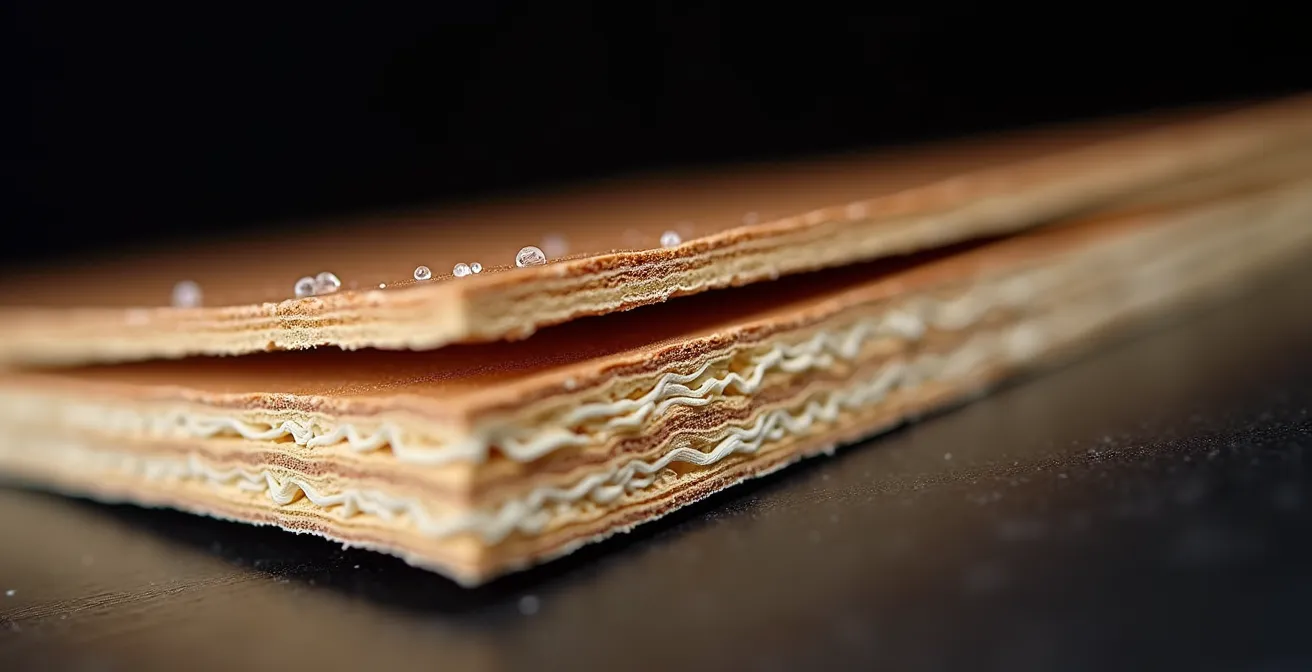
The layers typically consist of:
- A Wear Layer: A tough, clear topcoat, usually made of aluminum oxide and melamine resin, designed to resist scratches and fading.
- A Decorative Layer: Essentially a high-resolution photograph of wood, stone, or another material, printed on paper and saturated with melamine resin.
- A Core Layer: The thickest part of the plank, made from high-density fiberboard (HDF) or particleboard. This core is composed of wood fibers bonded together with yet more resin—historically, and in cheaper products today, this is urea-formaldehyde.
- A Backing Layer: A final layer of resin-saturated paper that provides stability and moisture resistance.
The term “eco-friendly” laminate is often a contradiction. The primary health concern is the HDF core. If it is manufactured using urea-formaldehyde, a low-cost but highly volatile adhesive, the plank will off-gas significant levels of formaldehyde for months or even years. While premium European and North American manufacturers have largely shifted to safer binders to meet strict emissions standards, low-cost laminate flooring remains a major source of indoor air pollution. The only way to verify safety is to demand documentation proving compliance with standards like CARB Phase 2 or, even better, a “No Added Urea-Formaldehyde” (NAUF) declaration from the manufacturer.
When to Install Floors to Ensure Proper Acclimatization and Avoid Gaps?
In flooring installation, “acclimatization” is a term most people associate with preventing physical problems like gaps, warping, or buckling. It is the process of letting the flooring material sit in the installation environment for several days to adjust to the home’s ambient temperature and humidity. However, from a health-protective standpoint, acclimatization serves a second, equally critical purpose: it is the first opportunity for initial, heavy off-gassing to occur before the material is permanently sealed into your home.
Proper ventilation during and immediately after installation is the most effective strategy for reducing VOC concentrations. As one case study on ventilation notes, “Fresh air circulation helps disperse harmful compounds. Open windows and doors for cross-ventilation. Use exhaust fans or place portable fans strategically.” This simple, no-cost action should be considered a mandatory part of the installation protocol, especially for the first week.
For parents with extreme chemical sensitivities or those renovating a nursery where zero risk is the goal, a more aggressive technique known as the “bake-out” method can be employed to accelerate the off-gassing of VOCs from new materials before moving into the space. This is a deliberate, controlled process:
- Step 1: Increase the room temperature to 85-90°F (29-32°C) using the home’s thermostat and, if necessary, supplemental space heaters.
- Step 2: Maintain this elevated temperature continuously for 3 to 5 days. The heat excites the volatile molecules, causing them to be released from the material at a much faster rate.
- Step 3: During the bake-out, ventilate the space thoroughly for 10-20 minutes, 2-3 times per day, to perform a complete air exchange and flush the released VOCs out of the home.
- Step 4: Monitor humidity levels to keep them below 60%. Excessive humidity combined with heat can damage some materials.
- Step 5: After the treatment period, return the room to a normal temperature and ventilate thoroughly one last time.
This method drastically shortens the most intense off-gassing period from weeks or months down to a matter of days. It is a powerful tool for taking control of your indoor environment, but it must be done in an unoccupied space.
When to Renovate Your Bedroom: The 3 Signs Your Sleep Environment Is Toxic
We spend a third of our lives sleeping, a state in which our bodies are focused on rest and repair. It is also a time when we are passively breathing the air in our immediate environment for an extended, uninterrupted period. A toxic bedroom can therefore have an outsized impact on our health. The challenge is that many harmful VOCs are odorless at lower concentrations, so you can’t rely on your nose alone. Recognizing the subtle signs of a compromised sleep environment is the first step toward remediation.
The problem is pervasive; startling EPA data shows VOC concentrations can be up to 10 times higher indoors than outdoors, a direct result of the materials we use in our homes. Here are three key signs that your bedroom environment may be toxic:
- Persistent “Morning” Symptoms: Waking up consistently with a stuffy nose, scratchy throat, headache, or unexplained fatigue that seems to improve after you leave the house can be a sign of poor indoor air quality. Your body is reacting to pollutants during its long exposure overnight.
- Noticeable Odors on Still Air Days: On days when windows are closed and there is little air movement, you may notice a faint chemical or musty smell that is otherwise unnoticeable. This indicates that pollutants are building up and are not being effectively ventilated.
- Age and Composition of Materials: If your bedroom contains significant amounts of pressed-wood furniture (particleboard, MDF), wall-to-wall carpeting, or vinyl flooring installed more than a decade ago, it may be a source of ongoing, low-level off-gassing. Older products were often manufactured with higher levels of formaldehyde and other chemicals before current regulations were in place.
To move from suspicion to certainty, an air quality monitor is an invaluable diagnostic tool. However, not all monitors are created equal. For a meaningful assessment, a quality consumer-grade device is necessary. Look for monitors that measure key indicators like TVOC (Total Volatile Organic Compounds), PM2.5 (fine particulate matter), and CO2. Be wary of devices claiming to measure specific formaldehyde levels, as consumer-grade sensors cannot accurately distinguish it from other VOCs.
Your 5-Step Toxic Environment Audit Plan: Bedroom Air Quality
- Points of Contact: List every material in the room: flooring, furniture (note if solid wood vs. composite), mattress, paint, window treatments, and any textiles.
- Collecte: Inventory the age and, if possible, the manufacturer of these items. Look for old particleboard furniture or carpeting, as these are common primary sources of VOCs.
- Cohérence: Compare this inventory to your health symptoms. Do your “morning symptoms” correlate with the presence of older, synthetic materials in the room?
- Mémorabilité/émotion: On a still day with windows closed, enter the room and note any specific odors. Is there a faint, sharp chemical smell (potential formaldehyde) or a musty odor (potential mold)?
- Plan d’intégration: Based on your findings, prioritize removal. The oldest particleboard furniture or the wall-to-wall carpet are often the most impactful items to replace first to improve air quality.
How to Insulate Your Attic Hatch Without Hiring a Contractor?
At first glance, insulating an attic hatch seems purely related to energy efficiency. It’s a common weak point in a home’s thermal envelope, letting heated air escape in the winter and hot air enter in the summer. However, from a building science and indoor air quality perspective, a leaky attic hatch has a more insidious effect: it supercharges the “Stack Effect.” Understanding this principle is essential for any parent concerned about VOCs from new flooring.
The Stack Effect is the movement of air into and out of buildings, driven by temperature differences. In winter, warm indoor air is more buoyant and rises. If it finds an escape route—like a poorly sealed attic hatch—it will flow upwards and out of the house. This creates negative pressure in the lower levels of the home, which in turn actively pulls in replacement air from the outside through cracks and leaks. More importantly, it also pulls air *up from the lowest levels of the home*, including basements and crawlspaces. In a home with new flooring, this phenomenon has a dangerous consequence.
The Stack Effect actively pulls pollutants from flooring and furniture into the air you breathe when attic hatches are poorly sealed.
– Building Science Expert, Indoor Air Quality and Building Envelope
This means a leaky attic hatch can turn your entire house into a chimney, constantly drawing the very VOCs off-gassing from your new floors directly into your family’s breathing zone on the main and upper levels. Sealing this air leak is therefore not just an energy-saving measure; it is a critical indoor air quality intervention. You can create a simple, effective seal without a contractor by building an insulated cover box from rigid foam board insulation to place over the hatch in the attic, or by installing a pre-made, zippered attic hatch tent. Combined with weatherstripping around the hatch opening itself, these solutions dramatically reduce the air leakage that drives the Stack Effect, helping to keep pollutants localized and making your ventilation efforts more effective.
Key Takeaways
- The “new floor smell” is a direct indicator of chemical off-gassing, primarily formaldehyde, and should be treated as a warning sign.
- True material safety is found by investigating the binding agents (adhesives, resins) via a Safety Data Sheet (SDS), not by trusting surface-level “eco” marketing.
- Solid, unfinished materials like reclaimed wood offer the highest degree of control and the lowest intrinsic VOC risk, as they eliminate industrial binders.
How to Cut Your Home’s Heat Loss by 30% Before Winter Arrives?
As a green building consultant, I advise clients that a home must be viewed as an interconnected system. The choices you make about one component, like flooring, have a direct impact on others, like air quality and energy efficiency. As we seal our homes to reduce heat loss and cut energy bills, we also reduce natural air exchange. This creates an airtight environment where any VOCs released from interior materials become more concentrated. Therefore, creating an energy-efficient home magnifies the importance of selecting non-toxic building materials from the outset.
The lifecycle impact of flooring materials extends far beyond your home’s air. The environmental cost begins long before installation. Raw material extraction is the highest impact phase, and the total carbon footprint of your floor is a critical part of a truly “green” decision. Not all materials are created equal.
| Emission Source | Percentage of Total | Impact Factor |
|---|---|---|
| Raw Material Extraction | 46.4% – 72.1% | Highest impact phase |
| Manufacturing & Installation | 8.3% – 33% | Energy consumption |
| Carpet Waste (US Annual) | 4 billion pounds | Landfill burden |
| Marble vs. Ceramic Energy | 78% higher | Non-renewable impact |
This data underscores the importance of choosing materials that are not only non-toxic but also sustainably sourced and manufactured. This is where third-party certifications provide real value. For wood products, including reclaimed wood and bamboo, the most rigorous standard comes from the Forest Stewardship Council (FSC). As detailed by industry analyses, “Certification from the U.S. Forest Stewardship Council (FSC) is the best indication a product is sustainable.” The FSC’s verification process ensures that forest operations meet stringent standards for protecting local wildlife, preserving biodiversity, and minimizing chemical use in the process. When you select an FSC-certified product, you are supporting a supply chain that values both ecological and human health.
Ultimately, cutting your home’s heat loss by sealing air leaks is a smart financial and environmental move. But it must be paired with a conscious, forensic approach to material selection. By combining an airtight building envelope with verified low- and zero-VOC materials, you create a home that is both highly efficient and genuinely healthy—the ultimate goal of green building.
To protect your family, your next step is not to just choose a material, but to request the Safety Data Sheet (SDS) for any flooring and finish you consider. Begin your material forensics today to ensure the foundation of your home is as healthy as it is beautiful.