
In summary:
- Nutrient loss begins the moment produce is harvested; local farmers markets drastically shorten this timeline, preserving vital vitamins and minerals.
- Shopping effectively is a skill: learn to read ripeness cues, decode farming labels beyond “organic,” and ask farmers targeted questions about their practices.
- True nutritional value comes from whole, minimally-processed foods, making a “multivitamin basket” of diverse produce superior to synthetic supplements.
- Proper post-market handling—from transport to storage and meal prep—is as crucial as the initial purchase for maintaining nutrient integrity.
There’s a vibrant, almost magical quality to a bustling farmers market. The kaleidoscope of colors, the earthy scent of fresh soil, the murmur of passionate growers sharing their stories. We go there instinctively seeking something better: fresher, tastier, and fundamentally more nutritious food. Many of us believe that simply showing up and buying local is enough to upgrade our health. We fill our reusable bags, feel good about our choices, and head home.
But what if the real key to unlocking peak nutrition isn’t just in the buying, but in the understanding? The common advice—”go early,” “talk to farmers”—is a starting point, but it barely scratches the surface. The nutritional journey of your food is a complex story that begins long before it lands in your tote bag. It’s a story of soil health, harvest timing, transport stress, and even your own kitchen habits.
The central premise of this guide is a shift in perspective. Instead of viewing the market as a simple grocery store, we must see it as a direct link to the food lifecycle. Maximizing nutrient density isn’t a passive act; it’s an active skill. It’s about learning a new form of food literacy that empowers you to look beyond a simple “organic” sticker and understand the true vitality of what you’re eating. This is about transforming you from a consumer into a conscious participant in your own nourishment.
In the sections that follow, we’ll deconstruct this lifecycle. We will explore why time is the enemy of nutrients, how to become an expert at selecting for peak ripeness, what farming labels truly mean for your health, and how to integrate these nutrient-dense foods into your life to build genuine metabolic wellness from the ground up.
Summary: Beyond Fresh: A Nutritionist’s Guide to Shopping the Farmers Market for Peak Nutrient Density
- Why Spinach Losing 50% of Its Nutrients After 3 Days in Transit?
- How to Pick a Ripe Melon Without Cutting It Open?
- Organic vs. “Pesticide-Free”: What Is the Real Difference at a Local Market?
- The Raw Milk Mistake That Can Send You to the ER
- When to Buy Strawberries: The Calendar Rule for Peak Flavor and Lowest Price
- How to Eliminate Single-Use Plastics from Your Grocery Run in 4 Steps?
- Why Your Expensive Multivitamin Might Be Creating “Expensive Urine”?
- How to Stop “Mindless Snacking” From Sabotaging Your Metabolic Health?
Why Spinach Losing 50% of Its Nutrients After 3 Days in Transit?
That vibrant green spinach you see at the supermarket has a hidden story. From the moment it’s harvested, a clock starts ticking. The plant, now separated from its life source, begins a process of decay. Light, oxygen, and temperature changes all trigger enzymatic reactions that degrade its delicate nutrients. This isn’t a minor issue; it’s a nutritional landslide. The title’s figure is a stark illustration, but the reality can be even more pronounced for specific vitamins.
Folate, a crucial B-vitamin for cell growth and metabolism, is particularly fragile. When produce is picked, trucked across the country, stored in warehouses, and then displayed under supermarket lights, its nutrient integrity plummets. In fact, research on packaged spinach shows that only 53% of folate is retained after just eight days of refrigerated storage. This is the fundamental ‘why’ of the farmers market: it drastically shortens the food lifecycle, collapsing the time from harvest to your kitchen from days or weeks to mere hours.
By buying directly from a local grower, you are essentially intercepting the produce at its peak vitality. You bypass the long-haul transit, the warehouse storage, and the extended shelf-life that are the primary culprits of nutrient degradation. However, your responsibility doesn’t end at the market stall. How you transport, wash, and store these precious greens at home becomes the final, crucial step in preserving the very nutrients you sought out. Your kitchen practices are the last leg of the food’s journey to your plate, determining whether its full potential is realized or lost.
How to Pick a Ripe Melon Without Cutting It Open?
We’ve all been there: you bring home a beautiful watermelon or cantaloupe, full of anticipation, only to cut it open and find a pale, flavorless interior. At a supermarket, this is a gamble. At a farmers market, it’s an opportunity to develop your food literacy. Selecting for peak ripeness is a skill, and melons are a masterclass. A truly ripe melon was allowed to fully mature on the vine, developing its full spectrum of sugars, antioxidants, and flavor compounds. This is ripeness you can’t fake.
Instead of just thumping it (which can be unreliable), you need to look for specific clues that tell the story of its harvest. These indicators are direct signals from the plant itself. For watermelons and cantaloupes, two of the most reliable signs are the “field spot” and the “tendril.”
Case Study: K-State Extension’s Field Ripeness Indicators
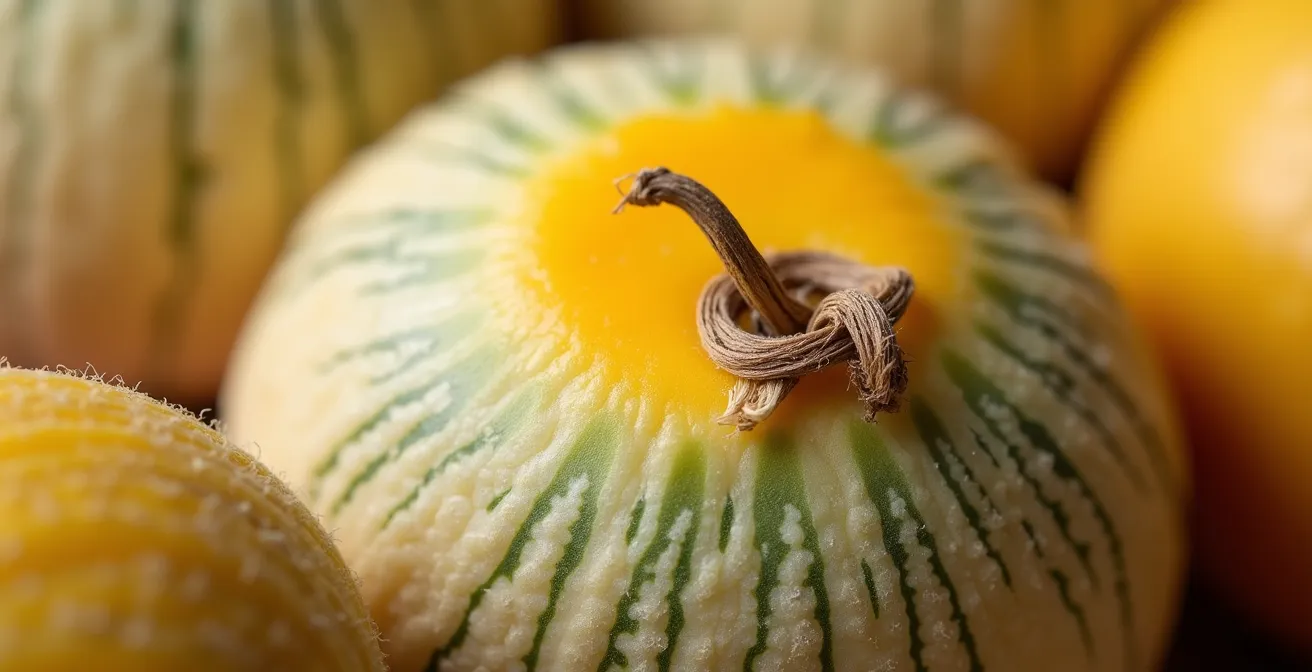
As horticultural experts from Kansas State University explain, you don’t need a knife to judge a melon. The first key is the field spot—the pale patch where the melon rested on the ground. This spot should be a creamy yellow or golden-orange color, not white or greenish. A white spot indicates it was picked prematurely. The second, more advanced sign for growers (and observant shoppers) is the tendril—the small, curly vine closest to where the melon stem attaches to the main plant. On a ripe melon, this tendril will be dried and brown. A green tendril means the melon is not yet ready.
This image below highlights exactly what to look for. Notice the rich, golden hue of the field spot and the withered tendril—these are your signs of peak flavor and nutrition.
By learning to read these signs, you are no longer a passive buyer. You are actively selecting for the highest quality, ensuring the melon you bring home is not just sweet, but also packed with the lycopene, vitamin C, and other phytonutrients that develop in the final stages of ripening. It’s a tangible way to guarantee you’re getting what you paid for: peak nutrition.
Organic vs. “Pesticide-Free”: What Is the Real Difference at a Local Market?
Navigating the labels at a farmers market can feel more confusing than at a supermarket. You’ll encounter a spectrum of terms: “USDA Organic,” “no-spray,” “pesticide-free,” and “regenerative.” These aren’t just marketing buzzwords; they represent vastly different farming philosophies and practices that directly impact the nutrient density and purity of your food. Understanding them is crucial for making informed choices that align with your health goals.
The term “organic” is the only one that is federally regulated. As the Ohio State University Extension clarifies, it represents a holistic system focused on soil health. An organic farmer doesn’t just avoid prohibited substances; they actively work to build a healthy, resilient ecosystem.
Organic farms do not use synthetic chemical inputs such as mineral fertilizers, pesticides, growth hormones, or antibiotics. Soil health and fertility are addressed with natural sources of organic matter and soil nutrients, such as animal or green manures, and compost.
– Ohio State University Extension, The Organic Certification Process for Farms
However, many small-scale farmers at local markets practice organic methods without pursuing the costly certification. This is where terms like “no-spray” or “pesticide-free” come in. These are not regulated claims, so they require a conversation. It’s your opportunity to engage in direct-source intelligence. Ask the farmer: “When you say ‘no-spray,’ does that also mean you don’t use synthetic fertilizers?” Their answer will reveal the depth of their commitment. The following table breaks down what these common labels generally imply.
| Label | Certification Required | Practices | Cost to Farmer |
|---|---|---|---|
| USDA Organic | Yes (3-year transition) | No synthetic pesticides, approved natural inputs only, soil health focus | Annual fees + inspection costs |
| ‘No-Spray’ | No | No pesticides used, but may use synthetic fertilizers | None |
| ‘Pesticide-Free’ | No | No pesticides, practices vary widely | None |
| ‘Beyond Organic’ | No | Often regenerative practices exceeding organic standards | None |
| ‘Regenerative’ | Optional (ROC available) | Focus on soil building, carbon capture, biodiversity | Varies |
The Raw Milk Mistake That Can Send You to the ER
As we embrace the benefits of minimally-processed foods from the farmers market, it’s easy to get swept up in the allure of “raw” and “unadulterated” products, especially raw milk. Proponents often claim it has superior health benefits over pasteurized milk. However, from a food safety and holistic nutrition perspective, this is one area where the potential risks can dramatically outweigh the unproven rewards. It’s a critical distinction in your journey toward food literacy.
While the market is a place of trust, it’s not immune to microbiology. Raw milk can harbor dangerous pathogens like Salmonella, E. coli, and Listeria, which are eliminated during pasteurization. The risk is not hypothetical. As leading health institutions consistently warn, the consequences can be severe, especially for children, pregnant women, and those with compromised immune systems.
Expert Warning: Johns Hopkins on Raw Milk Risks
The consensus in the medical community is clear. According to safety recommendations from Johns Hopkins Medicine, raw milk and cheese made from it should be avoided. They emphasize that major health bodies, including the FDA and CDC, advise against its consumption because of the potential for multiple pathogens that can cause severe gastrointestinal illness. The report concludes that any touted health benefits are “largely unsubstantiated and not worth the risk of getting sick.” This is a powerful reminder that “natural” does not always mean “safe.”
This doesn’t mean you should fear all animal products at the market. Instead, it means you must become a more discerning shopper, especially with high-risk foods like dairy, eggs, and meat. This is where asking the right questions becomes a non-negotiable part of your shopping ritual. It’s how you verify the farmer’s commitment to safety and quality.
Your Verification Checklist: Questions for High-Risk Foods
- For dairy/eggs: Ask ‘Are your animals grass-finished, not just grass-fed?’ to verify their diet’s quality.
- For meat: Inquire ‘What percentage of their diet was pasture versus grain?’ to understand the nutritional profile.
- For all animal products: Ask ‘Can you describe your cold chain process from farm to market?’ to ensure temperature safety.
- For raw products: Question ‘What testing protocols do you follow for pathogens?’ to gauge their safety measures.
- General trust question: See if you can ask, ‘May I visit your farm to see your practices?’ to build a deeper connection.
When to Buy Strawberries: The Calendar Rule for Peak Flavor and Lowest Price
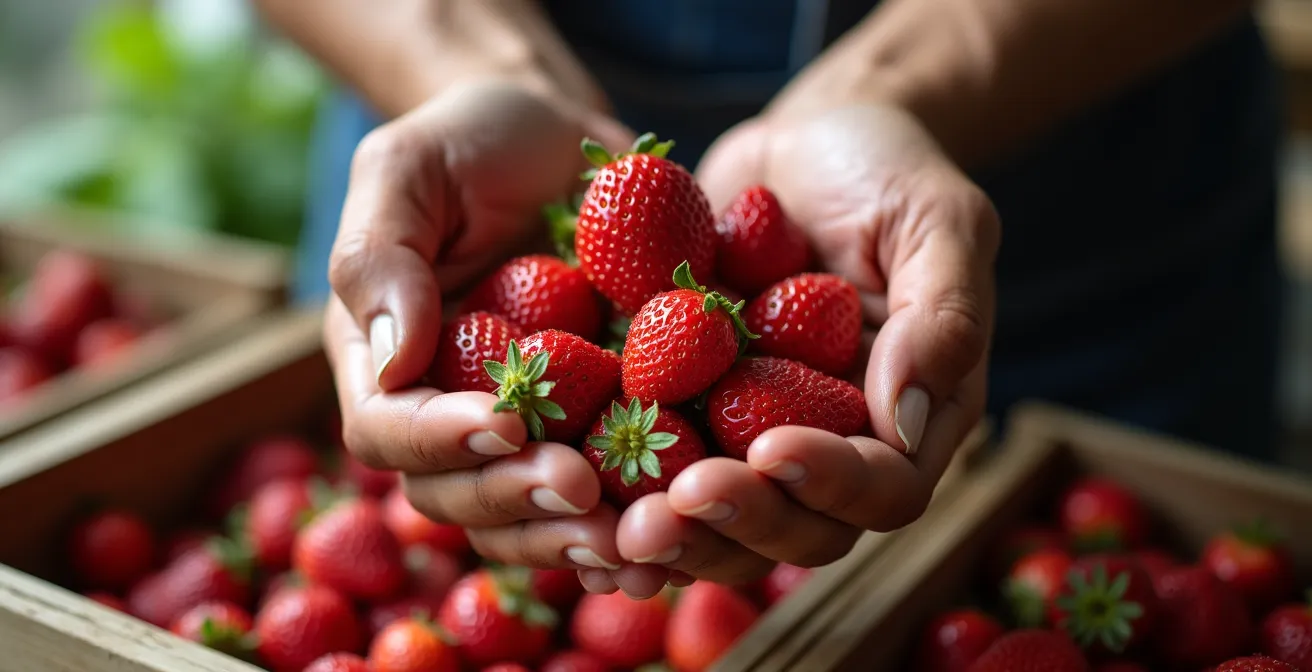
Walking through a farmers market is like walking through a calendar. The produce on display tells you the story of the season. The “calendar rule” is simple: buy foods when they are naturally, locally, and abundantly in season. This is when they are at their absolute peak in both flavor and nutrient density, and often at their lowest price. Strawberries are the perfect example. A locally grown, sun-ripened strawberry picked in June is a completely different food from one shipped from thousands of miles away in December.
That off-season strawberry may look the part, but it was likely picked green to survive transit and then artificially ripened with ethylene gas. This process short-circuits the natural development of phytonutrients, antioxidants like anthocyanins (which give berries their red color), and, of course, flavor. The difference is not trivial; it’s a significant nutritional deficit. Research indicates that you can be consuming up to 40% less nutrient-dense produce when you opt for imported, off-season items compared to their fresh, local counterparts.
Shopping seasonally aligns you with nature’s rhythm. It means you are eating foods at the very moment their nutrient integrity is at its zenith. This strategy requires a small shift in mindset: instead of going to the market with a rigid list, go with an open mind. See what is overflowing on the tables. Is it asparagus and rhubarb in the spring? Zucchini and tomatoes in the summer? Or squash and apples in the fall? Let the abundance of the season guide your purchases.
This approach not only maximizes your nutritional intake but also connects you more deeply to your local food system. You begin to anticipate the arrival of your favorite items, turning your grocery run into a celebration of the season’s best offerings. It’s the most intuitive and powerful way to ensure your plate is always filled with the most vibrant food possible.
How to Eliminate Single-Use Plastics from Your Grocery Run in 4 Steps?
Your commitment to nutrient density extends beyond the purchase itself. The way you transport your fresh produce home is a crucial, often overlooked, part of preserving its quality. The flimsy, single-use plastic bags offered at many stalls are detrimental not only to the environment but also to the delicate produce they hold. They trap ethylene gas, which accelerates ripening and spoilage, and offer no protection from light or bruising, both of which degrade nutrients.
Adopting a plastic-free shopping system is a powerful ritual that protects both the planet and your provisions. It requires a little preparation but quickly becomes a seamless part of your market routine. As one professional shopper emphasizes, having the right gear is everything.
After countless shopping trips, I’ve perfected my market gear. Always bring: Reusable bags (multiple sizes for different types of produce). Small cooler or insulated bag for meats and dairy. Portable produce baskets or crates. Water bottle and snacks for longer visits.
– Professional shopper’s tip via, Home and Texture
Creating your own system is simple and can be broken down into four key actions. This isn’t just about bringing a single canvas bag; it’s about having a versatile toolkit ready for whatever treasures you find.
- Assemble Your Toolkit: Your primary gear should include multiple canvas or cloth bags of various sizes. Add in smaller mesh or cloth produce bags for delicate items like greens and herbs, and consider beeswax wraps as a brilliant, reusable alternative for wrapping cheese or baked goods.
- Protect Delicate Greens: Leafy greens are particularly susceptible to wilting and light damage. Using dark-colored cloth bags for things like spinach and kale helps block light, which can degrade vitamins like folate and vitamin C.
- Manage Water Content: Not all produce wants the same environment. For high-water-content greens (lettuce, chard), a slightly damp cloth bag can help them stay crisp. For root vegetables (carrots, potatoes), loose storage in a sturdy canvas bag is best to prevent moisture buildup.
- Create a Label-Free Log: Without plastic packaging, you lose the labels. Get a small notepad or use a phone app to jot down the farm name, item, and any specific storage advice the farmer gives you. This builds your food literacy and helps you remember which farm grew those amazing tomatoes.
Key takeaways
- The nutrient value of produce is a direct function of its “food lifecycle”—the shorter the time and distance from farm to table, the higher the nutrient integrity.
- Effective market shopping is a skill based on food literacy: learning to read ripeness signals, decode farming labels, and ask growers informed questions.
- Building your meals around a diverse “multivitamin basket” of seasonal, whole foods from the market is metabolically superior to relying on synthetic supplements.
Why Your Expensive Multivitamin Might Be Creating “Expensive Urine”?
Many health-conscious individuals diligently take a daily multivitamin, believing it’s a reliable insurance policy against nutritional gaps. However, the very reason we seek out farmers markets—the superior bioavailability of nutrients in whole foods—is the same reason why many isolated, synthetic vitamins end up being largely ineffective. The concept of “expensive urine” isn’t a joke; it’s a biological reality. It describes a state where your body, unable to absorb the high doses of synthetic nutrients from a pill, simply excretes them.
Your body is designed to recognize and absorb nutrients in the complex, synergistic forms found in nature. The vitamin C in a bell pepper comes packaged with bioflavonoids that aid its absorption. The iron in dark leafy greens is accompanied by other minerals and compounds. Synthetic vitamins, created in a lab and isolated from their natural co-factors, are often poorly recognized and utilized by our cells. You might be swallowing 500% of your daily value of B12, but your body may only be able to absorb a tiny fraction of it.
This is where the farmers market becomes your true multivitamin. Instead of relying on a pill, you can consciously build a “multivitamin basket” of whole foods, each chosen for its rich contribution to your overall nutrient needs. This approach respects the body’s innate intelligence and provides nutrients in a form it can actually use.
Building a “Multivitamin Basket” at the Farmers Market
As experts at Johns Hopkins note, produce from local farmers not only tastes better but contains higher levels of vitamins and minerals due to its freshness. The strategy is to think in terms of nutrient categories and fill your basket accordingly. Create a vibrant, food-based multivitamin with items like: mushrooms and sunflower sprouts for a range of B-vitamins, dark leafy greens (kale, chard) for iron and magnesium, brilliantly orange-yolked eggs from pastured hens for vitamin A and choline, and colorful bell peppers for a potent dose of vitamin C, which crucially enhances the absorption of plant-based iron from your greens.
By shopping this way, you are creating a truly holistic and effective nutritional strategy. You’re moving away from the reductionist model of isolated supplements and embracing the profound, synergistic power of whole foods. You are investing in real nutrition, not just the potential for it.
How to Stop “Mindless Snacking” From Sabotaging Your Metabolic Health?
You’ve done the work. You’ve navigated the market, selected the most vibrant, nutrient-dense produce, and brought it home with care. But all this effort can be undone by one common hurdle: a lack of preparation. If that beautiful head of lettuce wilts in the crisper and those crisp radishes are forgotten, their nutritional potential is wasted. The final, critical step in maximizing your market haul is integrating it into your daily life, especially when it comes to snacking.
Mindless snacking on processed, packaged foods is a major saboteur of metabolic health, leading to blood sugar spikes and inflammation. The farmers market provides the perfect antidote: a bounty of whole-food snacks packed with fiber, healthy fats, and protein. The key is to make these healthy options the most convenient options. This requires a post-market ritual of washing, chopping, and strategic storage.
As registered dietitian Julie Fromm advises, the moments after you get home are crucial for success.
Once you get home, take a little time to prep what you bought for easier weekday meals or snacking. Wash it. Chop it. Put it out in a bowl. Whatever you need to do to make it more likely that you and your family will use what you bought… Having the fresh ingredients in the front and easy to get to means you will be more likely to see them and eat them.
– Julie Fromm, R.D., Henry Ford Health
To build a defense against mindless snacking, stock your kitchen with metabolically healthy choices. Your shopping list should prioritize items that are ready-to-eat or require minimal prep:
- High-fiber snacks: Jicama sticks, radishes, snap peas, and carrots offer a satisfying crunch and feed your gut microbiome.
- Healthy fats: Avocados, nuts, and seeds from local vendors provide lasting energy and help stabilize blood sugar.
- Protein options: Hard-boiled pastured eggs and artisanal nut butters (without added sugar) make for satiating, muscle-supporting snacks.
Once home, wash and chop these vegetables immediately. Store them in clear, glass containers at eye level in your refrigerator. When hunger strikes, the first thing you see will be a delicious, ready-to-eat, nutrient-dense option, making the healthy choice the easy choice.
By transforming your market haul into accessible, healthy snacks, you complete the food lifecycle. You’ve honored the farmer’s work and your own investment by ensuring every bit of that hard-won nutrition makes it into your body, building true, lasting metabolic health from the inside out. The next step is to make this a consistent practice on your next market visit.