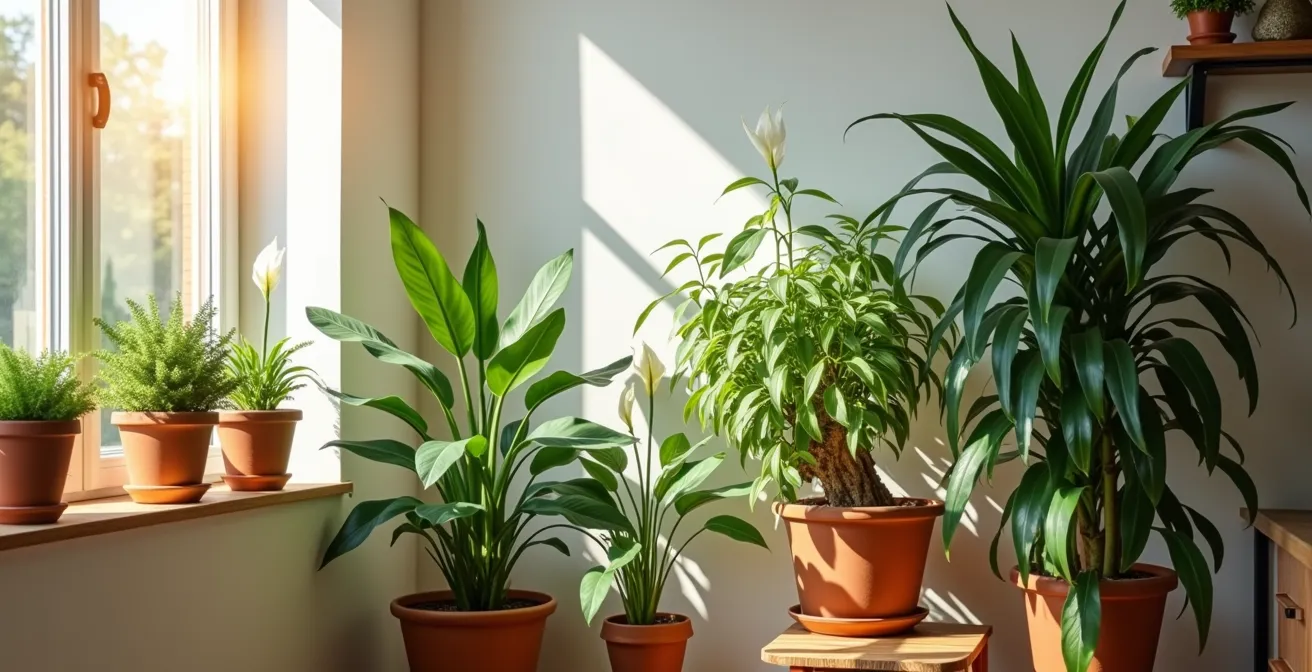
To truly purify indoor air, you must think like a botanist and build a functional ‘botanical lung’—not just buy a few trendy plants.
- Effective air purification depends on high plant biomass density, not just the species of plant.
- The plant’s entire system, including soil microorganisms, acts as a “VOC sink” to break down pollutants.
Recommendation: Prioritize creating a dense, multi-layered system of 15-20 plants in your small space, focusing on maximizing leaf surface area and a healthy root environment.
For the urban apartment dweller, the promise of indoor plants that purify the air is a breath of fresh air—literally. Surrounded by city smog and confined to a small space, the idea that a few green companions can scrub the atmosphere clean is incredibly appealing. You’ve likely seen the lists, circulated endlessly online, naming the “Top 10 NASA-approved plants” that will magically eliminate toxins from your home. So you buy a snake plant for the bedroom and a succulent for your desk, expecting a healthier environment.
However, from a botanical standpoint, this common approach often confuses decoration with effective phytoremediation. The reality is that achieving a measurable improvement in air quality within a 200-square-foot room is a game of strategy, density, and ecosystem management. It’s about understanding how plants function not as individual objects, but as a collective, biological system. The key isn’t just *which* plants you choose, but *how many*, *where* you place them, and *how* you maintain their entire ecosystem.
But what if the secret to clean air wasn’t in buying one “super-plant,” but in creating a functional ‘botanical lung’ for your apartment? This involves moving beyond the plant’s leaves and considering the crucial role of its root system, the soil’s microbiome, and the strategic placement that can even dampen urban noise. It requires a shift in perspective from passive plant ownership to active ecosystem cultivation.
This guide will walk you through the scientific principles and practical steps to build that botanical lung. We will deconstruct common myths, explore the science behind plant functions, and provide actionable strategies to transform your small apartment into a genuine green sanctuary that not only looks beautiful but works hard to keep you healthy.
To navigate this botanical deep dive, here is a look at the key systems we will explore to build your apartment’s personal air filtration engine.
Summary: A Botanist’s Framework for Building a Functional Green Air-Filtration System
- Why You Need More Than One Succulent to Impact Air Quality?
- How to Keep a Snake Plant Alive in a Low-Light Bedroom?
- Soil vs. Hydroponics: Which System Reduces Mold Risk for Allergy Sufferers?
- The Watering Mistake That Breeds Fungus Gnats in Your Living Wall
- Where to Place Plants to Dampen City Noise Entering Through Windows?
- Top Floor vs. Courtyard Facing: Which Unit Is Actually Quieter in a High-Rise?
- Why “New Car Smell” in Your Home Indicates Dangerous Formaldehyde Levels?
- How to Find Peace and Quiet in a Noisy City Apartment Without Moving?
Why You Need More Than One Succulent to Impact Air Quality?
The most persistent myth in home phytoremediation is that a single, well-chosen plant can significantly clean the air. While a lone succulent on a windowsill is a lovely decorative accent, its impact on air quality is negligible. The science of air purification through plants is a numbers game, specifically one of biomass density. For plants to make a measurable dent in airborne pollutants like Volatile Organic Compounds (VOCs), you need a lot of them. The famous 1989 NASA study is often misinterpreted; its findings were based on sealed, lab-like chambers, not a drafty apartment with open doors and windows.
More recent analysis highlights the sheer volume required. To replicate the purification rates seen in labs, research suggests you would need between 10 to 1,000 plants per square meter of floor space. While 1,000 is clearly impractical, the lower end of that spectrum gives us a realistic target. For a 200 sq ft (~18.5 sq m) room, this means aiming for a critical mass of plants, not just a few specimens. The goal is to maximize the total leaf surface area available for gas exchange and the total root-soil volume for microbial activity. One small succulent simply doesn’t have the biomass to process a significant volume of air.
To begin building your botanical lung, you need a strategic approach to density. Instead of thinking about individual plants, think about creating a green zone. Combine plants of different sizes and structures—tall floor plants, bushy mid-level plants, and trailing plants from shelves or hangers—to fill the vertical space. This layered approach is the first step in moving from a decorative plant collection to a functional, air-purifying ecosystem.
How to Keep a Snake Plant Alive in a Low-Light Bedroom?
The Snake Plant (Dracaena trifasciata, formerly Sansevieria) is rightly celebrated as a star of low-light environments, making it a perfect candidate for bedrooms. But its value goes far beyond mere tolerance for shade. The reason it’s an exceptional bedroom companion lies in its unique metabolism. Unlike most plants, the Snake Plant utilizes Crassulacean Acid Metabolism (CAM). This means it performs its gas exchange at night, opening its stomata to absorb carbon dioxide and release oxygen while you sleep. This nighttime activity makes it one of the few plants that actively purifies the air during sleeping hours, directly benefiting your rest.
Despite its reputation for being “indestructible,” the number one killer of Snake Plants is misplaced kindness, specifically overwatering. In a low-light bedroom, the plant’s metabolic rate slows down, and it requires significantly less water than in a bright spot. The soil must be allowed to dry out completely between waterings. For a typical bedroom setting, this could mean watering as infrequently as every 2-3 weeks, or even longer in winter. Using an unglazed terracotta pot is highly recommended, as its porous nature allows the soil to dry out faster and provides better aeration for the roots, preventing the dreaded root rot.
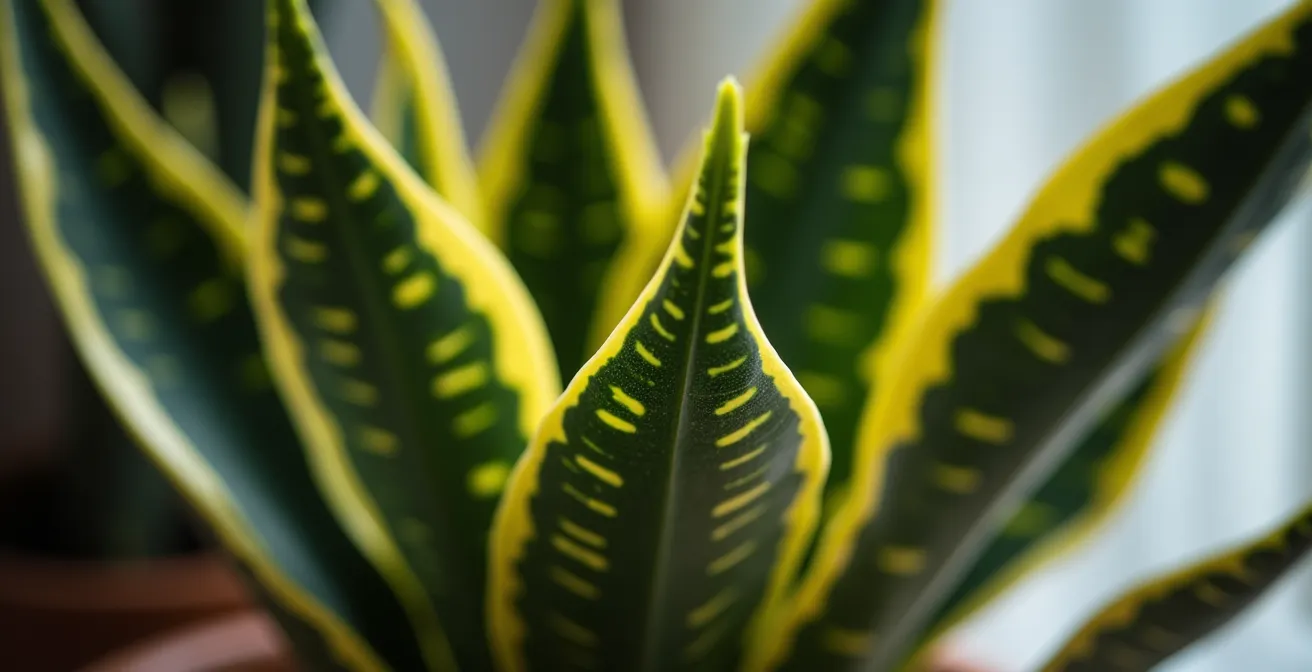
While it tolerates deep shade, a Snake Plant will be healthier and more robust in bright, indirect light. Positioning it near a window with a sheer curtain, or in a spot that gets reflected light, will help it thrive without risking sunburn. The key is to replicate its native dry environment: neglect is often the best form of care.
Here are the essential rules for success:
- Water only when the soil is 100% dry to the touch, all the way to the bottom of the pot.
- Choose unglazed terracotta pots to promote soil drying and root health.
- Position in indirect light; it tolerates low light but thrives with a bit more.
- Avoid overwatering at all costs; it is the primary reason these hardy plants fail.
Soil vs. Hydroponics: Which System Reduces Mold Risk for Allergy Sufferers?
For allergy sufferers, the dream of a lush indoor jungle can be haunted by the fear of mold. Traditional potting soil, when kept consistently damp, can become a breeding ground for mold and mildew, which release spores into the air and can trigger allergic reactions. This presents a paradox: the moisture plants need to live can create an environment that harms your health. Fortunately, the choice of growing medium is a powerful tool for controlling this risk. While soil is a key player in air purification, hydroponic and semi-hydroponic systems offer a compelling alternative for those with high sensitivity.
The secret to soil’s purifying power lies in its microbiome. As research has shown, potting soil microorganisms contribute significantly to air purification, creating a “VOC sink” where microbes actively break down airborne pollutants drawn down to the root zone. However, this biological activity requires moisture, which is the source of the mold problem. The solution is not to eliminate soil, but to manage moisture correctly or choose a different system altogether.
Hydroponic systems, which grow plants directly in a nutrient-rich water solution without soil, virtually eliminate the risk of soil-borne mold. Semi-hydroponics, using an inert substrate like Lightweight Expanded Clay Aggregate (LECA), offers a middle ground. LECA wicks water up to the roots from a reservoir, keeping the top layer dry and inhospitable to mold and pests like fungus gnats, while still allowing for excellent aeration. Active hydroponic systems offer the best of both worlds: maximizing the root-air interface for superior VOC breakdown while completely removing the risk of soil mold.
This table breaks down the trade-offs for an allergy-conscious plant owner:
| System Type | Mold Risk | VOC Breakdown | Maintenance |
|---|---|---|---|
| Traditional Soil | Higher if overwatered | Excellent – microorganisms aid breakdown | Regular watering needed |
| Semi-Hydroponics (LECA) | Very Low | Good | Less frequent water changes |
| Active Hydroponics | Lowest | Best – maximizes air-root interface | System monitoring required |
The Watering Mistake That Breeds Fungus Gnats in Your Living Wall
You’ve invested in a beautiful living wall or a dense collection of potted plants, only to find your apartment plagued by tiny, annoying black flies. These are fungus gnats, and their presence is a direct indicator of the single most common watering mistake: keeping the top layer of soil constantly moist. Fungus gnat larvae thrive in the damp, rich organic matter of the top inch of soil. Traditional top-watering methods, where you pour water directly onto the soil surface, create the perfect breeding ground for them.
This problem is more than just a nuisance; it’s a sign that your plant’s ecosystem is out of balance. Chronically damp soil not only breeds pests but also deprives roots of oxygen, leading to root rot and a weakened plant that is less effective at purifying the air. To build a healthy and functional botanical lung, you must master moisture management. The goal is to deliver water directly to the roots while keeping the surface dry.
The most effective technique to achieve this is bottom-watering. By placing your potted plants in a tray of water for 20-30 minutes, you allow the soil and roots to absorb moisture from the bottom up via capillary action. This ensures the root ball is thoroughly hydrated while the top layer of soil remains relatively dry, breaking the fungus gnat life cycle. For living walls or larger planters where bottom-watering isn’t feasible, allowing the top 1-2 inches of soil to dry out completely between waterings is crucial. You can also apply a physical barrier, such as a one-inch layer of coarse sand or diatomaceous earth, on top of the soil to prevent adult gnats from laying their eggs.
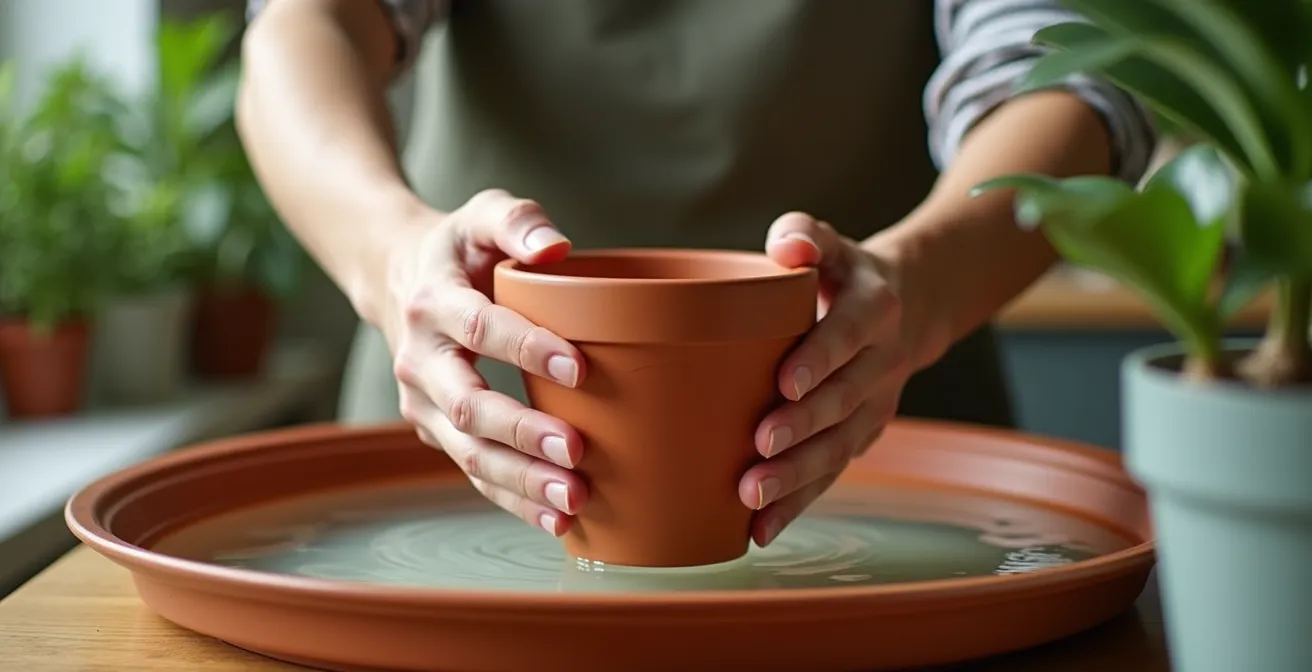
Switching your watering method is a fundamental shift in plant care that pays huge dividends, leading to healthier plants, fewer pests, and a more effective air-purifying system. It’s a simple change that addresses the root cause of the problem, rather than just treating the symptoms.
Where to Place Plants to Dampen City Noise Entering Through Windows?
For urban dwellers, poor air quality is often accompanied by another persistent stressor: noise pollution. The constant hum of traffic, sirens, and city life infiltrates through windows, disrupting peace and quiet. While no houseplant can soundproof a room, strategic placement of specific types of plants can create a “green buffer” that helps to dampen and diffuse high-frequency sounds, contributing to a more serene indoor environment.
The effectiveness of plants as acoustic absorbers is tied to their physical structure. Large, flexible leaves and dense foliage are particularly good at absorbing sound energy, especially in the higher frequency ranges (like the screech of brakes or distant chatter). Hard surfaces like glass and bare walls reflect sound, creating echoes and amplifying noise. By placing a barrier of plants in front of a window, you introduce soft, complex surfaces that break up and absorb sound waves instead of reflecting them. While plants are less effective against low-frequency rumbles from trucks or construction, their psychological effect is also significant. The visual appeal of a green buffer provides a sense of separation and sanctuary from the chaotic city outside.
To maximize this acoustic dampening effect, you should create a multi-layered sound barrier. Here’s how:
- Use dense-foliage plants: Species like Ficus, Schefflera, and large ferns (e.g., Boston Fern) with a high leaf count are ideal. Position them directly in the path of the sound entering through the window.
- Create layers and height: Don’t just place one plant on the floor. Use plant stands, shelves, and hanging baskets to create a green curtain of varying heights, covering as much of the window area as possible.
- Increase surface area: Trailing plants like Pothos or Philodendron hung from the top of the window frame can add an extra layer of leaf surface in the upper sound zones.
- Combine with other solutions: For a comprehensive approach, pair your plant buffer with heavy acoustic curtains, which are more effective at blocking the low-frequency noise that plants can’t absorb.
Top Floor vs. Courtyard Facing: Which Unit Is Actually Quieter in a High-Rise?
When choosing an apartment, many people assume a top-floor unit will be the quietest. However, the reality of urban acoustics and air quality is more complex. The “best” unit depends on what you’re trying to escape: ground-level noise or airborne pollutants. The choice between a top-floor, street-facing, or courtyard-facing unit involves significant trade-offs, and your plant strategy should adapt accordingly.
A top-floor unit might be further from street-level traffic noise, but it can be more exposed to the “urban canyon effect,” where sound travels upwards between buildings. Furthermore, top floors often have higher exposure to ozone, a pollutant formed when sunlight reacts with other emissions. A lower-level, street-facing unit will bear the brunt of traffic noise and vehicle-related pollutants like particulate matter (PM2.5) and nitrogen oxides (NOx). A courtyard-facing unit is often the quietest from a traffic noise perspective, especially if the courtyard is well-landscaped, but it can suffer from poor air circulation, trapping pollutants from other units and potentially leading to higher indoor VOC concentrations.
Your botanical strategy should be tailored to the specific challenges of your unit’s location. A HEPA air purifier is almost always a necessary partner to your plants, especially for PM2.5 particles that plants cannot effectively remove. This table provides a framework for making an informed choice and planning your indoor ecosystem.
| Unit Type | Noise Level | Air Pollutants | Best Plant Solutions |
|---|---|---|---|
| Top Floor | Variable (urban canyon effect) | Higher ozone exposure | Ozone-resistant plants like Spider Plants |
| Street-Facing Lower | High traffic noise | PM2.5, NOx from vehicles | Dense foliage plants + HEPA purifier |
| Courtyard-Facing | Quieter if landscaped | Poor air circulation risk | High air-exchange plants like Boston Fern |
Ultimately, there is no single “quietest” or “cleanest” apartment. Each location has a unique environmental profile. By understanding these dynamics, you can select a unit that best aligns with your priorities and then deploy a targeted plant and technology strategy to mitigate its specific weaknesses.
Why “New Car Smell” in Your Home Indicates Dangerous Formaldehyde Levels?
That distinct “new car smell” or the scent of freshly assembled furniture is often associated with newness and cleanliness. In reality, it’s the smell of off-gassing chemicals, one of the most prominent being formaldehyde. This common VOC is a known human carcinogen and is released from a vast array of household items, including pressed-wood furniture (particleboard, MDF), carpets, paints, and adhesives. In the enclosed environment of a small apartment, formaldehyde levels can build up quickly, posing a significant health risk.
While ventilation is the first and most critical line of defense, certain plants have demonstrated a remarkable ability to remove formaldehyde from the air. In the process of phytoremediation, plants absorb gaseous pollutants through their leaves and transport them to the root zone, where microbes break them down into harmless components. As studies have shown, the Boston Fern (Nephrolepis exaltata) ranks highest in its ability to metabolize formaldehyde, making it an essential component of any anti-VOC botanical strategy. Other powerful allies include the Peace Lily, Rubber Plant, and Spider Plant.
However, relying on plants alone during a period of heavy off-gassing (like after bringing in new furniture) is not enough. You need an aggressive, multi-pronged mitigation strategy to protect your indoor air quality. This involves actively accelerating the off-gassing process while simultaneously removing the released chemicals.
Action Plan: Your Formaldehyde Mitigation Strategy
- Implement Aggressive Ventilation: Open all windows for at least 15-30 minutes every day, especially during the first few weeks after introducing new furniture, to flush out accumulated VOCs.
- Use the “Bake-Out” Method: If possible before moving in, increase the room temperature to 85-90°F (30-32°C) for several hours with fans running, then ventilate thoroughly. Heat accelerates the off-gassing of formaldehyde.
- Deploy High-Density Planting: Position a high concentration of known formaldehyde-absorbing plants like Boston Ferns, Peace Lilies, and Rubber Plants in the affected rooms.
- Monitor and Maintain: Use a consumer-grade VOC detector to monitor air quality and aim to keep levels below the WHO-recommended short-term exposure limit of 0.08 ppm (parts per million).
Key Takeaways
- True air purification requires a dense ‘botanical lung’, not just a few plants. Aim for 15-20 plants in a 200 sq ft room.
- The entire plant system, including soil microbes, works as a ‘VOC sink’. Healthy roots in the right medium are as important as leaves.
- Strategic placement can do more than clean air; it can also provide acoustic buffering against high-frequency city noise.
How to Find Peace and Quiet in a Noisy City Apartment Without Moving?
Creating a true sanctuary in a noisy city apartment goes beyond just filtering the air. It’s about crafting a sensory haven that provides psychological and physiological relief from the constant external stimulation. Plants are the cornerstone of this strategy, serving as a powerful tool to calm the mind, buffer noise, and clean the air. The cumulative effect of a well-designed indoor ecosystem is greater than the sum of its parts, offering a profound sense of peace and control over your personal environment.
Scientific research validates this experience. Studies consistently show that interacting with indoor plants—even just by being in their presence—measurably reduces psychological and physiological stress. This biophilic effect lowers cortisol levels, reduces blood pressure, and improves focus. In an urban setting where you have little control over the noise and pollution outside your window, cultivating a thriving indoor garden gives you a tangible sense of agency and a connection to nature that is deeply restorative.
Achieving this level of tranquility requires a holistic, three-pillar strategy that integrates everything we’ve discussed. It’s the final assembly of your apartment’s botanical lung, where air quality, acoustics, and aesthetics work in harmony. Your goal is not just to survive in the city, but to create an environment where you can thrive.
This peace strategy rests on the following pillars:
- Acoustic Calm: Use dense, large-leaf plants positioned near windows as a green buffer to absorb high-frequency sounds. Complement them with acoustic curtains and soft furnishings to tackle a wider range of noise.
- Visual Calm: Create dedicated “green corners” with a variety of plant shapes, colors, and heights to create a focal point of natural beauty. Keep surrounding surfaces decluttered and use natural materials like wood and terracotta to enhance the serene atmosphere.
- Air Calm: Combine your dense planting of 15-20 air-purifying species with a high-quality HEPA air purifier. The plants will tackle gaseous VOCs like formaldehyde, while the purifier will capture the fine particulate matter (PM2.5) that plants are less effective against, creating a comprehensive air quality solution.
Your journey to cleaner air and a quieter mind begins with the first plant, but it’s realized through the creation of a complete, living system. Begin by assessing your space, choosing your botanical allies, and committing to the principles of density and strategic placement. Build your botanical lung, one plant at a time.