Contrary to popular belief, simply ‘leaving no trace’ is no longer enough to save our planet’s most precious World Heritage Sites.
- Passive conservation (not touching, avoiding crowds) is a baseline, but the scale of threats from climate change and overtourism requires a more active role from travelers.
- The most rewarding travel experiences are often found by consciously avoiding overwhelmed hotspots and understanding the true impact of our choices.
Recommendation: Shift your mindset from a passive ‘sustainable’ tourist to an active ‘regenerative’ traveler—one who deliberately contributes to the healing and preservation of the places they visit.
Standing before a monument that has witnessed centuries of human history is a profoundly humbling experience. There’s a palpable connection to the past, a sense of awe that pictures can never capture. Yet, for the conscious traveler, this awe is often tinged with a quiet guilt. You see the crowds, the worn-down stones, the velvet ropes, and you can’t help but wonder: “Is my presence here part of the problem?” It’s a valid concern. For too long, the conversation around responsible tourism has centered on passive advice like “take only pictures, leave only footprints.”
While well-intentioned, this mindset of simply minimizing harm is no longer sufficient to protect these fragile treasures. The cumulative pressure of mass tourism, combined with larger environmental threats, demands a fundamental shift in our approach. We must evolve from being careful observers into becoming active custodians, however temporary our visit may be. But what if the key to saving these sites wasn’t about sacrifice, but about seeking a deeper, more meaningful form of travel? What if the most responsible choices were also the ones that led to the most profound experiences?
This guide is designed to reframe your perspective. We will move beyond the basics of sustainable travel and explore the principles of regenerative tourism. We’ll delve into the invisible damage our presence can cause, learn how to ensure our money genuinely supports conservation, and discover how choosing lesser-known paths can unlock a richer connection to history. It’s time to transform from a tourist who tries not to cause damage into a traveler who actively contributes to preservation.
To navigate this new approach to heritage travel, this guide breaks down the essential strategies and mindset shifts required. We will explore the scientific, economic, and cultural dimensions of responsible visitation, providing you with a clear roadmap to becoming a true guardian of the past.
Summary: How to Visit World Heritage Sites Without Destroying Them?
- Why Touching Ancient Frescoes destroys Them Even If Your Hands Are Clean?
- How to Identify Ticket Fees That Actually Go Toward Site Maintenance?
- Machu Picchu vs. Choquequirao: Why the “Sister City” Is a Better Experience?
- The “Instagram vs. Reality” Shock That Disappoints Visitors at Major Landmarks
- How to Visit the Colosseum at the One Specific Hour It Isn’t Crowded?
- Why “Sustainable” Is No Longer Enough to Save Vulnerable Destinations?
- The Souvenir Mistake That Disrespects Sacred Traditions in Indigenous Regions
- How to Choose a Vacation That Actively Restores the Local Ecosystem?
Why Touching Ancient Frescoes destroys Them Even If Your Hands Are Clean?
The gentle admonition, “Please do not touch,” is a familiar refrain at any heritage site. Most visitors assume this rule exists to prevent the transfer of dirt or oils from our skin. While true, the reality is far more insidious and microscopic. Your hands, even when freshly washed, are carriers of a complex ecosystem of bacteria. When you touch an ancient surface, you are introducing foreign microbes into a fragile, centuries-old environment.
These microbes can be devastating. They can trigger chemical reactions that alter pigments, form biofilms that obscure the art, and even feed on the materials themselves. This isn’t just a theoretical risk; it’s a documented process of destruction. Our role as protectors of these sites begins with understanding that the damage we can cause is often invisible.
Case Study: The Art-Eating Bacteria of Altamira Cave
The Paleolithic paintings in Spain’s Altamira cave are not just threatened by time, but by microscopic life introduced by human contact. A scientific analysis revealed a shocking discovery: the paintings now host a thriving, previously unknown bacterial ecosystem. Genetic tests showed that Acidobacteria, a strain known to consume iron oxide, make up the majority of this new population. This is deeply alarming because iron oxide is the primary component of the red pigments used by our ancestors. In essence, by touching or even just breathing too close to the art, we have inadvertently introduced bacteria that are literally eating away at one of humanity’s oldest masterpieces, as detailed in a report by Science.org on art-loving bacteria.
Therefore, respecting the “no touching” rule is not merely about politeness; it is a critical act of conservation. It is about preventing the introduction of a biological threat that can irreversibly erase our shared history. The best way to show reverence for ancient art is to keep a respectful distance, allowing your eyes—not your hands—to do the exploring.
How to Identify Ticket Fees That Actually Go Toward Site Maintenance?
Paying an entrance fee feels like a direct contribution to the site’s preservation. We assume our money goes toward repairing weathered stone, funding archaeological research, or paying conservators. Unfortunately, this is not always the case. For many state-run sites, revenue can be absorbed into a general government treasury, with only a small fraction, if any, being reinvested into the site itself. A responsible traveler must therefore become a discerning consumer, actively seeking evidence that their financial contribution will have a direct impact.
This requires a small amount of investigative work before and during your visit. True financial transparency is a hallmark of a well-managed heritage organization. These bodies are proud of their conservation work and are usually eager to show donors and visitors exactly how their money is being used. A lack of accessible information should be considered a red flag.
This metaphorical illustration shows the difference between opaque and transparent funding models at heritage sites.

As the image suggests, transparent funding channels resources directly into tangible restoration efforts, whereas opaque systems can lead to funds being diverted. To ensure your contribution counts, look for these signs of transparency:
- Check the Official Website: Before you go, look for sections labeled “Annual Reports,” “Conservation Projects,” or “Our Impact.” Legitimate organizations will often publish detailed reports on their finances and project outcomes.
- Identify the Management Model: Is the site managed by a government body or a dedicated non-profit foundation or trust? Non-profit foundations are often structured to reinvest all revenue directly into their mission of preservation.
- Look for Separate Preservation Trusts: Many famous sites have associated “Friends of…” associations or preservation trusts that raise funds specifically for conservation. Donating to these entities can often be a more direct and impactful way to contribute than simply buying a ticket.
Machu Picchu vs. Choquequirao: Why the “Sister City” Is a Better Experience?
Machu Picchu is, for many, the ultimate symbol of ancient wonder. Yet, its immense popularity has become its greatest threat. The sheer volume of visitors causes tangible erosion, strains local infrastructure, and creates an experience that can feel more like waiting in line at a theme park than connecting with Incan history. Overtourism data shows that daily visitation at Machu Picchu regularly reaches twice UNESCO’s recommended maximum of 2,500 visitors. This immense pressure compromises both the site’s integrity and the quality of the visitor’s experience.
The regenerative traveler’s solution is not to boycott Peru, but to seek alternatives that offer a more authentic connection while relieving pressure on the main site. Choquequirao, often called Machu Picchu’s “sacred sister,” is a perfect example. Larger in scale but accessible only by a challenging multi-day trek, it offers an experience of solitude and discovery that is now impossible at its more famous counterpart. Choosing Choquequirao is not a compromise; it’s an upgrade.
This comparative table breaks down the crucial differences between visiting an over-touristed icon and its less-accessible alternative, illustrating why the more challenging option often provides a superior and more responsible experience.
| Criteria | Machu Picchu | Alternative Sites (e.g., Choquequirao) |
|---|---|---|
| Daily Visitors | 5,000+ peak season | <100 average |
| Access Difficulty | Train + bus (easy) | 2-day trek (challenging) |
| Infrastructure Impact | High – visible erosion | Minimal – preserved state |
| Visitor Experience | Crowded photo spots | Intimate exploration |
| Conservation Status | At risk from overtourism | Better preserved |
Opting for a site like Choquequirao directly supports the diversification of tourism, provides income to different local communities, and grants you the rare gift of experiencing a world-class historical site in near-solitude. It is a choice that benefits both the destination and the traveler, embodying the core principle of finding greater value in responsible decisions.
The “Instagram vs. Reality” Shock That Disappoints Visitors at Major Landmarks
We’ve all seen them: the perfect, empty shots of the Trevi Fountain, the solitary figure watching a sunrise over Angkor Wat. Social media has created a digital portfolio of impossibly pristine heritage sites, curating an expectation that reality can rarely match. The result is often a jarring sense of disappointment. Instead of quiet contemplation, visitors find themselves in a sea of selfie sticks, jostling for a glimpse of the very monument they came to admire. This “Instagram vs. Reality” shock can cheapen the experience, reducing a sacred or historic place to a mere backdrop for a photo.
This phenomenon not only affects our personal enjoyment but also reinforces harmful tourism patterns. It concentrates visitors in a few “iconic” photo spots, leading to extreme localized crowding and wear, while vast areas of a site may remain unexplored. A regenerative approach requires us to de-program this visual conditioning and cultivate a connection to the place itself, not to the image we expect to capture.
The key is to shift our research and on-site focus from the visual to the experiential. By managing our expectations and engaging with the site on a deeper level, we can bypass the disappointment and discover a more personal and authentic connection. This requires a conscious pre-trip strategy to build anticipation for the history, not just the photo.
Your Pre-Trip Digital Detox Checklist: Managing Visual Expectations
- Engage with Audio: Replace image-browsing with listening to historical podcasts or academic lectures about the site to build a narrative context.
- Study the Layout: Look at historical maps or architectural plans online. Understanding the space and its intended function creates a deeper appreciation than seeing a single, perfect photo.
- Build Emotional Connection: Read historical fiction, diaries, or first-person accounts set at the location to connect with the human stories of the place.
- Reframe Your Photography: Once there, challenge yourself to ignore the famous shots. Focus instead on unique details: the texture of a stone, the play of light and shadow, an empty corridor, or an interesting carving.
- Embrace the Full Experience: Consciously engage other senses. What does the air feel like? What can you hear beyond the crowds? What stories do the worn steps tell?
By adopting these practices, you reclaim your experience from the curated fiction of social media. You arrive not as a content creator, but as a curious and respectful student of history, ready to appreciate the site for what it is, not for the picture it can provide.
How to Visit the Colosseum at the One Specific Hour It Isn’t Crowded?
The image of a serene, empty Colosseum seems like a fantasy. For most of the day, this icon of Roman engineering is overwhelmed with thousands of visitors. However, with strategic planning, it is possible to experience these world-famous landmarks without the suffocating crowds. The secret lies in understanding visitor flow and exploiting the small windows of time when traffic is at its lowest. This often means arriving at the earliest possible moment—literally as the gates open—or during the final hour before closing, when most tour groups have departed.
This strategy isn’t just about comfort; it’s an act of respect. By visiting during off-peak hours, you reduce your contribution to the peak-load stress on the site’s infrastructure. Effective crowd management is a critical conservation tool, as demonstrated by other heritage cities. For example, in Dubrovnik, Croatia, authorities now work closely with cruise lines and use electronic monitoring to limit the number of tourists entering the historic center at any one time. As a traveler, you can contribute to this effort by timing your own visit thoughtfully.
This visual represents the reward for such planning: an intimate, atmospheric experience with history.
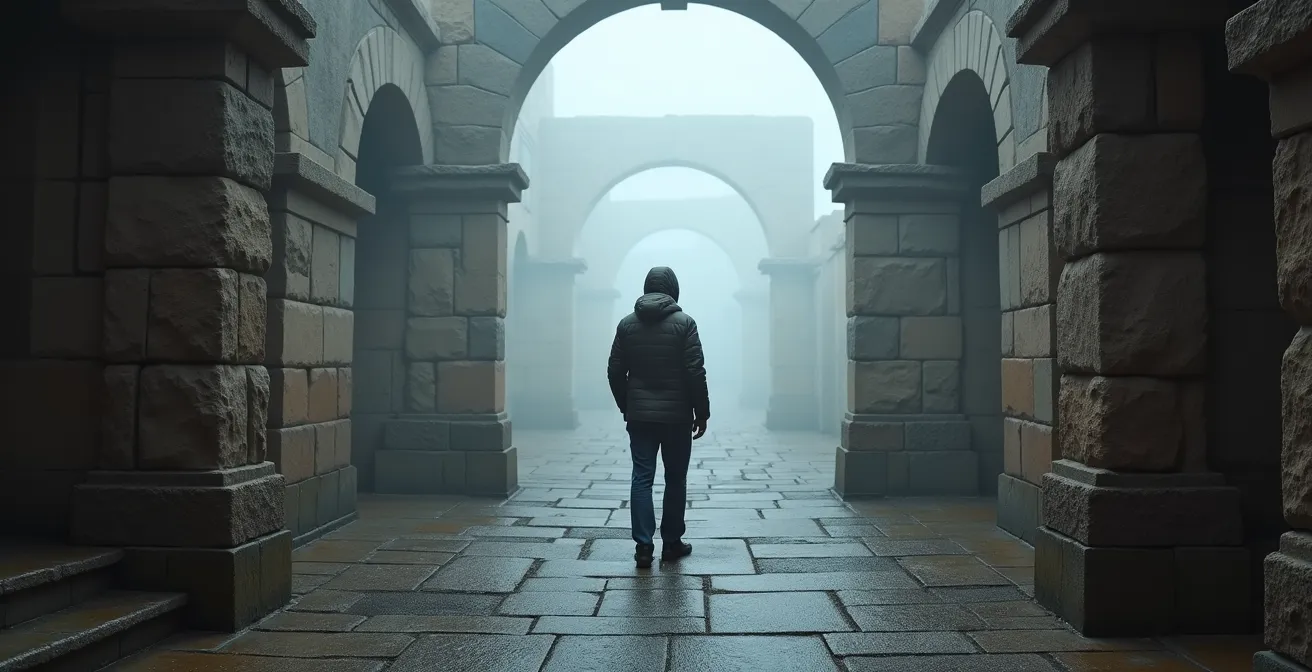
To find that “golden hour,” you must do your research. The best times vary by site and season. For the Colosseum, the first entry slot of the day, especially in the low season, often provides a brief period of relative calm before the large tour groups arrive. Similarly, the last entry slot can be peaceful as the day-trippers have already left. This requires pre-booking your ticket for a specific time slot well in advance. It’s a small logistical effort that pays enormous dividends in the quality and responsibility of your visit.
Why “Sustainable” Is No Longer Enough to Save Vulnerable Destinations?
For years, “sustainable tourism” has been the gold standard for ethical travel. The core idea is to meet the needs of the present without compromising the ability of future generations to meet their own—in short, to do no harm and maintain the status quo. However, in the face of escalating global threats, simply maintaining the status quo is a losing battle. Our world’s heritage is not just standing still; it is actively degrading.
The primary driver of this degradation is climate change. Rising sea levels, extreme weather events, droughts, and wildfires pose an existential threat to sites around the globe. A stark UNESCO climate impact assessment reveals that one-third of natural World Heritage Sites and one-fifth of cultural sites are already under severe threat from global warming. In this context, a tourism model focused only on “sustainability” is like trying to keep a boat from taking on more water while ignoring the gaping hole in its hull. It’s a passive approach when active intervention is desperately needed.
This is why the conversation must evolve from sustainable to regenerative tourism. Regenerative travel moves beyond the goal of doing no harm and actively seeks to heal and improve the destination. It asks not “How can I minimize my impact?” but “How can my visit be a positive force for restoration?” This table clarifies the fundamental shift in mindset.
| Aspect | Sustainable Tourism | Regenerative Tourism |
|---|---|---|
| Goal | Do no harm / Maintain status quo | Actively heal and improve |
| Carbon approach | Offset emissions | Fund reforestation projects |
| Community impact | Minimize disruption | Invest in local education & infrastructure |
| Economic model | Fair trade practices | Circular economy investment |
| Visitor role | Passive observer | Active participant in restoration |
Embracing a regenerative approach means seeing ourselves as partners in the long-term health of a place. It means choosing tour operators who invest in ecosystem restoration, staying in accommodations that contribute to community development, and leaving a destination quantifiably better than we found it. It is the necessary and urgent evolution of responsible travel.
The Souvenir Mistake That Disrespects Sacred Traditions in Indigenous Regions
Purchasing a handcrafted souvenir directly from a local artisan seems like a perfect way to support a community while bringing home a meaningful memento. In most cases, it is. However, in Indigenous regions, the line between commercial craft and sacred artifact can be blurred, and well-intentioned travelers can inadvertently participate in cultural disrespect or appropriation. The critical mistake is assuming that just because an item is for sale, it is appropriate for an outsider to own.
Many Indigenous cultures have objects, patterns, and designs that are reserved for specific ceremonial purposes, or whose use is restricted to certain members of the community. When these items are commodified and sold to tourists, it can dilute their spiritual significance and violate deeply held cultural protocols. As Elias Canetti, the Bulgarian Nobel laureate, noted, “The recognition and transmission of human diversity lie at the heart of a fundamental ideal — one that must be nurtured and advanced sustainably.” Nurturing this diversity means respecting its boundaries.
The recognition and transmission of human diversity lie at the heart of a fundamental ideal — one that must be nurtured and advanced sustainably
– Elias Canetti, quoted at UNESCO World Heritage Committee
The responsibility falls on us, the visitors, to be discerning and respectful in our purchases. This requires moving beyond a simple transaction and engaging in a genuine, curious dialogue with the artisan. Instead of simply asking “How much?”, we must ask questions that demonstrate our respect for the culture behind the craft. Asking about the story of a pattern or the traditional use of an object can open up a rich conversation and help you understand whether you are buying a piece of art or a piece of someone’s sacred identity.
Key Takeaways
- The future of responsible travel requires a shift from a passive ‘sustainable’ mindset (do no harm) to an active ‘regenerative’ one (actively heal and improve).
- A traveler’s financial contribution is only effective if it’s transparent. Actively verify that your fees and donations directly fund conservation projects.
- The most profound travel experiences often lie off the beaten path. Choosing alternatives to over-touristed sites benefits both the destination’s health and your own sense of discovery.
How to Choose a Vacation That Actively Restores the Local Ecosystem?
You have embraced the regenerative mindset. You understand the invisible threats, you know how to vet funding, and you are ready to choose experiences that heal rather than harm. The final step is to put it all into practice by selecting a vacation that is built around the principle of active restoration. This means looking for destinations and tour operators that have moved beyond simply offsetting their impact and are now channeling tourism revenue directly into environmental and cultural renewal projects.
This is not a niche concept; it is a growing movement. Destinations worldwide are realizing that the long-term health of their tourism industry is inextricably linked to the health of their ecosystems and heritage. They are implementing innovative models where visitors become direct investors in conservation. One of the most effective and transparent models is the “eco-tax,” a small levy applied to tourist stays that is earmarked exclusively for sustainability projects.
The Balearic Islands in Spain provide a powerful example of this model in action. Their eco-tax program is not a token gesture; it is a significant engine for positive change. A report shows that €377 million in eco-tax revenue is set to be invested across 79 sustainability projects in 2025 alone. These funds support a wide range of initiatives, from restoring marine ecosystems and protecting Posidonia seagrass meadows to preserving historical farmsteads and improving water management. When you visit the Balearics, you are not just a tourist; you are an active participant in this large-scale restoration effort.
Choosing a destination with a proven regenerative model like this transforms your vacation from a passive leisure activity into a meaningful act of stewardship. Your holiday becomes an investment in the very beauty and history you have come to admire, ensuring its survival for generations to come. This is the ultimate goal of the regenerative traveler.
To put these principles into practice, start by researching destinations that have implemented transparent eco-taxes or by seeking out tour operators who are certified B-Corps or members of organizations like The Long Run, which are committed to positive environmental and social impact.
Frequently Asked Questions on How to Visit World Heritage Sites Without Destroying Them?
How can I tell if an ‘authentic’ item is appropriate to purchase?
Ask the artist directly: ‘Is this an object appropriate for an outsider to own?’ It is vital to distinguish between items made by Indigenous artists for a commercial audience versus items made for sacred or ceremonial rituals that should never be commodified. The artist is the ultimate authority on this distinction.
What questions should I ask before buying cultural items?
Engage with respect and curiosity. Ask questions like: ‘Could you share the story behind this pattern?’, ‘Who does the profit from this sale directly support?’, and most importantly, ‘Is this design sacred or ceremonial in nature?’ This dialogue shows respect and helps you make an informed, ethical choice.
Are photographs considered a form of cultural appropriation?
Yes, they absolutely can be. Photographing people, private ceremonies, or sacred objects without obtaining explicit and enthusiastic consent is a form of cultural theft. Even though nothing physical is taken, you are appropriating a person’s image or a culture’s private moments for your own use. Always ask first, and respect a ‘no’.